P182
The Reverse Beacon Network
In 2008 Alex VE3NEA released the first version of the Reverse Beacon Network. It is a clever concept that allows visitors to the RBN website determine what atmospheric conditions are like between different parts of the world.
Conventional beacons are licensed transmitters that send a repeated signal or message on a given frequency while operators around the world see if they can pick it up. The Reverse Beacon concept cleverly inverts this situation.
Special HF receiver stations are set up at different parts around the world. These are Software Defined receivers that can simultaneously scan large segments within multiple HF amateur bands. They are looking for people sending ‘CQ in Morse Code. When a station is heard, the receiver station decodes the speed of the Morse, the operator callsign and the strength of the signal. All these reports are processed by a special ‘Aggregator’ program on a PC then relayed to the main Reverse Beacon server where the results are logged and shown on a world map.
Operators can use the RBN website to enter the name of a receive station not too distant from their current location and build a view of what countries are presently within range and show how active these places are.
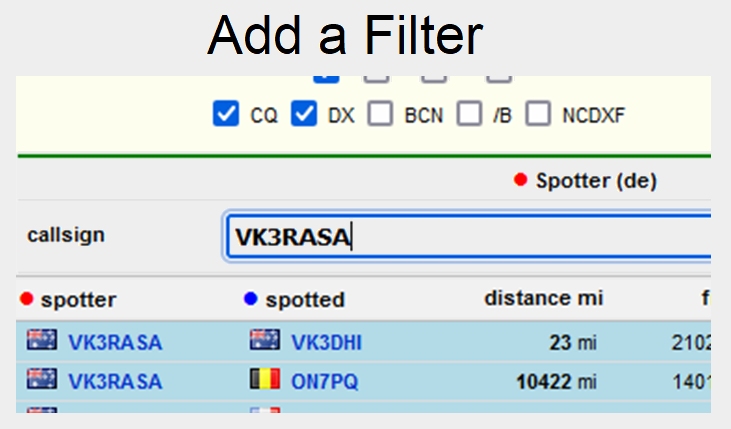
The image below shows the RBN website where the monitoring station VK3RASA has been listening for a short time.
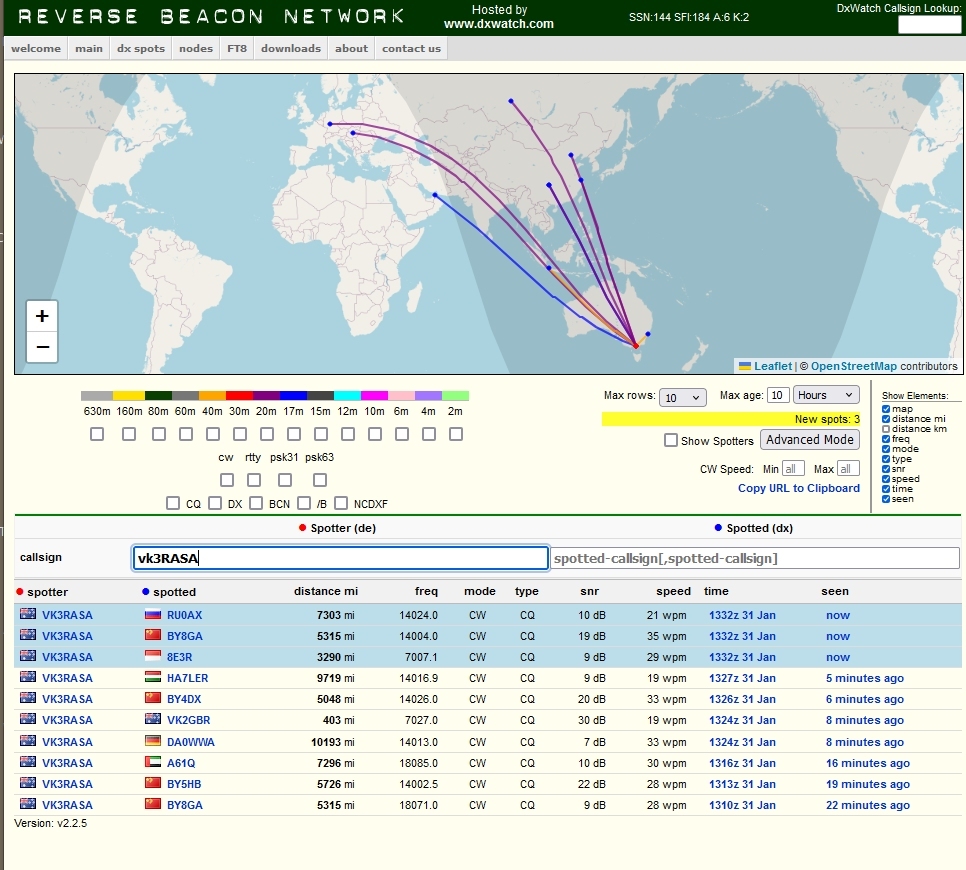
In the input tab to the right of the spotter callsign it is possible to insert your operator callsign, then put out a CQ TEST <callsign> transmission in Morse Code and then the screen will show what locations around the world could hear your transmission. This process can be seen in the example video at the end of this page.
The Reverse Beacon Network in Australia
As of early 2025, there are 236 Reverse Beacon skimmer stations worldwide. In 2020 there were only three stations active in Australia and this left a significant gap in the South.
In that year RASA established a third station a little to the East of Melbourne (centred in the map below) which operates under the identifier of VK3RASA. In 2024 an additional NSW station was added under the designation of VK2RH.
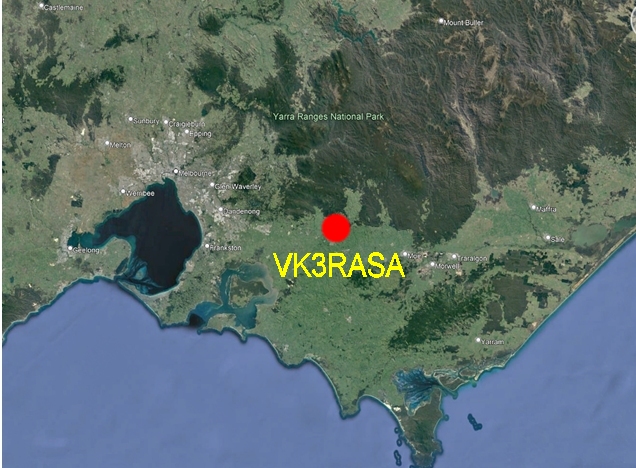
The VK3RASA receiver hardware is located in a shed, away from domestic interference sources. A receive station consists of a Red Pitaya multi-channel HF software defined receiver, a power supply, a dedicated PC and a live internet connection to the rest of the world.
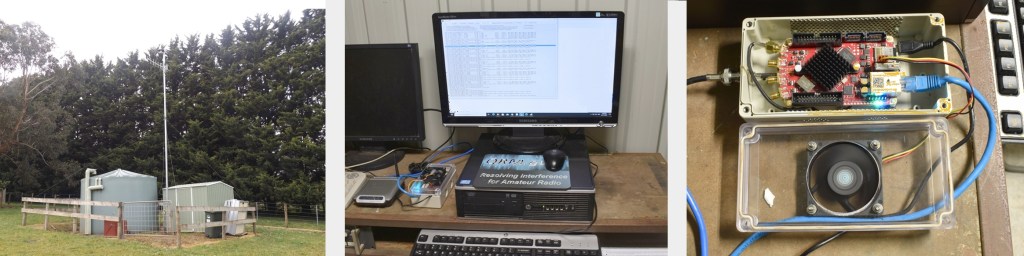
The Reverse Beacon has become an important tool for DX operators trying to understand the quality of atmospheric conditions around the world. During major contest events it experiences a lot of traffic.
The official RBN website contains a lot of information about the network.
Follow this link, then click on the MAIN tab at the top of the screen for world activity
https://www.reversebeacon.net/index.php
A detailed list of active Skimmer stations can be found here:
https://www.reversebeacon.net/nodes/detail.php
Here is an excellent video clip demonstrating in real time how fast the network can respond to operator transmissions on just five watts and also shows the importance of using directional HF antennas
 This Is Amateur Radio