P200
Aircraft Enhancement Propagation
Operations on 2 metre and 70cm are generally regarded as line-of-sight bands where transmissions beyond 30-40 kilometres require greater elevation at the transmitter or receiver site. These transmissions also tend to be reflected by metal surfaces, so that where a line-of-sight path is not available, contact is possible by both stations aiming at a shared reflective surface. Commercial aircraft have large, reflective surfaces and fly at great heights. Brief contacts over many hundreds of kilometres are possible where two stations are on either side of a mountain range and direct communications on VHF and UHF would be impossible.
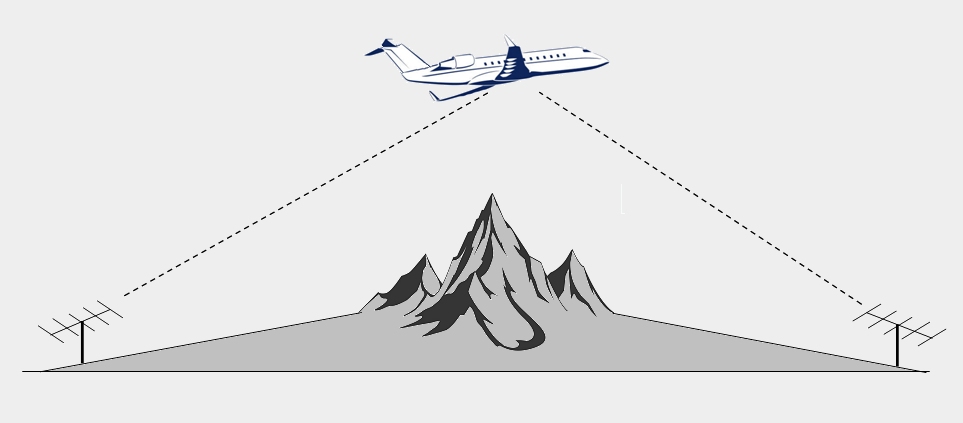
While this may seem to be a very limited transmission path, the effect is real and contacts may be possible for several minutes. Where flight paths are very busy the effect can be exploited several times per hour.
For example the Melbourne to Sydney flight path is one of the worlds busiest. The distance is just over 1000 km and it climbs above a major mountain range. The image below shows the elevation profile of the terrain between these two cities. There are excellent opportunities to exploit this propagation phenomenon on this route. Operators consult flight timetables. About 25 minutes after the aircraft has departed one of the cities, reflected signals over the mountain range can become evident. The larger the aircraft, the stronger the reflective signature will become.

We are fortunate to have many internet tools to provide reliable data on the height and location of commercial aircraft around the world. The Flight Aware website can provide real-time information about many routes domestically and overseas.
https://www.flightaware.com/live/
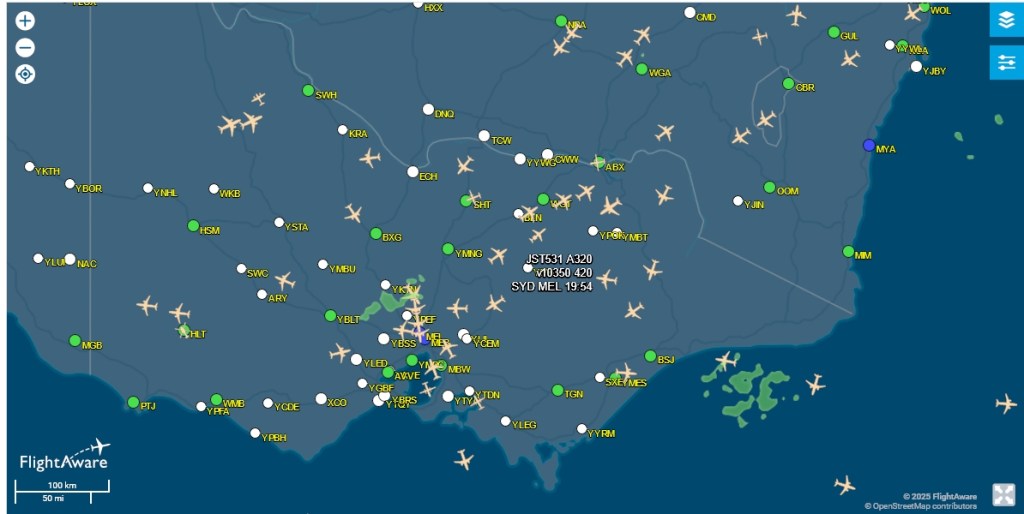
With this tool, individual trajectories can be plotted in advance.

Useful Links
A discussion about Aircraft Enhancement by Barry VK3BJM
 This Is Amateur Radio