
P23
Basic Electrical Safety
Electrical Safety
Amateur Radio has an element of risk, and it is important to identify and mitigate these risks. Once you understand the risks, you can apply simple preventative measures and Amateur Radio will be a safe and enjoyable hobby.
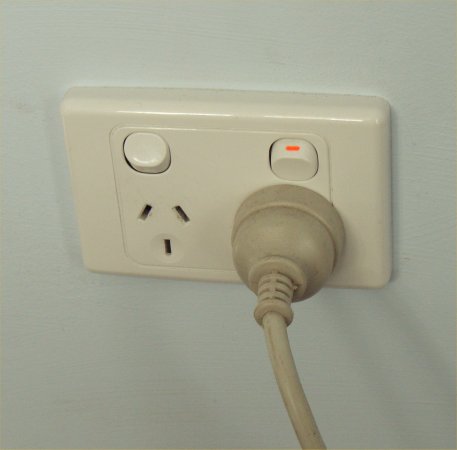
Identifying Risks
Risks range from exposure to electromagnetic radiation, high voltages, high currents, loud noises and injuries from constructing equipment.
Do not work alone when attempting work where there is a high risk.
Do not touch a transmitting antenna. Above 5 watts, antennas can cause what is known as “RF Burns” which are caused by EMR current penetration and can be severe.
The Foundation Level Study Guide
All Blue Tiles form part of the syllabus for the Foundation Level Recognition Certificate (operator licence). A primary source of information for many of the blue tile topics can be found within the Foundation Level Study Guide. This is a free download available at:
https://vkradioamateurs.org/flsg/ This is a digital book and contains many links to other resources and explanatory videos.
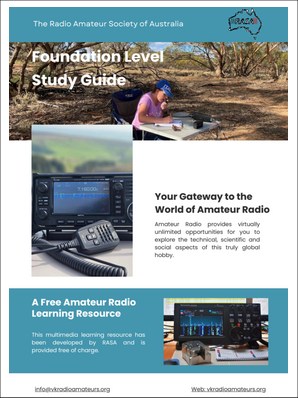
Information on Electrical Safety can be found from Pages 70 to 81 in this book
ACMA Syllabus Extract
According to the ACMA Foundation Syllabus, the required knowledge on this topic is:
9.1 Dangerous Voltages
Recall that high voltages and high currents are dangerous.
9.2 Equipment to be approved
Recall that any mains-operated equipment sold, hired or supplied must be approved by an electricity authority or other relevant authority.
Recall that approved equipment will have an approval label.
9.3 Awareness of state electricity authority requirements
Recall that it is necessary to check relevant requirements regarding unqualified people wiring and testing mains-operated equipment. This includes leads, plugs and sockets connected to the household mains supply.
9.4 Electrical Earthing
Recall why most mains-operated equipment should have a safety earth connection.
9.5 Fuses
Recall that fuses prevent excessive currents that may cause heat damage or fires.
9.6 Correct fuse to be used
Recall that a correct fuse must be fitted to all electrical equipment.
9.7 Replacing fuses
Recall the precautions to be taken when replacing faulty fuses including the selection of a fuse rated in accordance with an equipment manufacturer’s specifications or the requirements of an electricity supply authority.
9.8 Station layout for physical safety
Recall that the layout of an amateur station should take account of physical safety issues.
Recall that trailing cables are trip hazards and dangerous.
9.9 Power-lead safety
Recall that the layout of an amateur station should take account of physical safety issues.
Recall that trailing cables are trip hazards and dangerous.
9.10 Know location and desirability of a Mains OFF switch
Recall the desirability for a clearly marked switch to turn off all station equipment in an emergency.
9.11 Actions to be taken in the event of an accident involving electricity
Recall that, in the event of an accident involving electricity, the first action is to safely switch off the power.
9.12 Electric Shocks
Recall that a casualty of electric shock must not be touched unless the power has been switched off.
9.13 Call for help – use of resuscitation techniques
Recall that emergency services need to be called immediately and that cardiopulmonary resuscitation (CPR) may need to be administered.
9.14 Antennas and safety
Recall that it is important for all people (and animals) to be kept at a safe distance from antennas.
9.15 Antennas and safety
Recall that it is important for all people (and animals) to be kept at a safe distance from antennas.
9.16 Radio waves can be dangerous
Recall that electromagnetic radiation (EMR) can be dangerous and higher frequencies and power levels and proximity to the source increase the danger.
9.17 Safe Distances from Antennas
Recall that a safe distance from an antenna depends on the ERP, operating frequency, antenna type and orientation.
9.18 Antenna erection
Recall that antenna erection is potentially dangerous and should be carried out by suitably qualified people.
9.19 Securing and siting antennas
Recall that antennas and their fittings must be suitably located and secured and must never be connected to, or sited close to, mains poles and l
9.20 Lightning Protection
Recall that it is good practice to install lightning protection on antennas, disconnect antennas from any radio equipment before a thunderstorm and never operate an amateur radio during a thunderstorm.
9.21 Safe use of headphones
Recall that excessive volume when wearing headphones can cause damage to human hearing.
 This Is Amateur Radio