P252
Old Radio Restoration
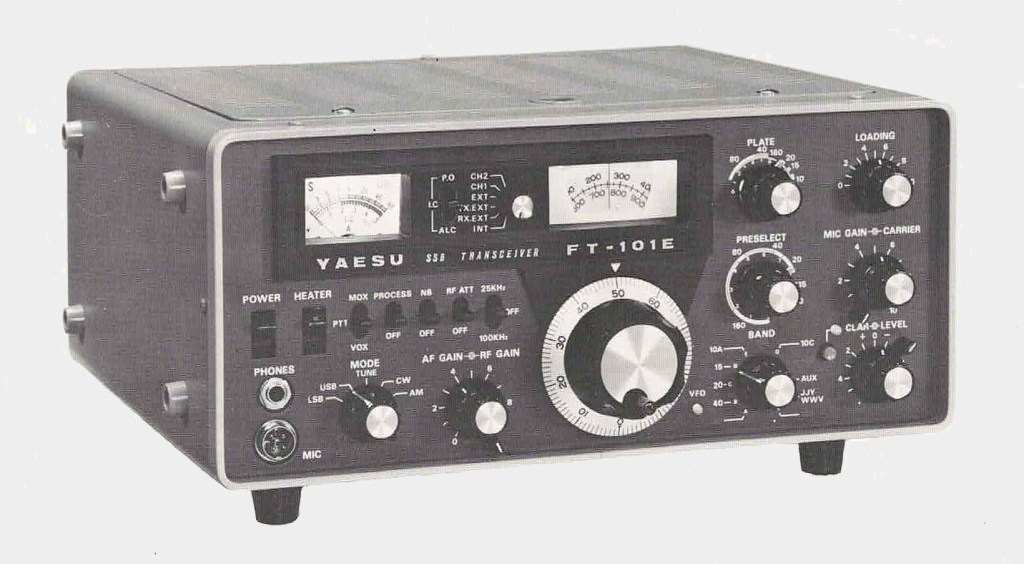
While we are surrounded by modern marvels of electronics which may be functionally superior to radios of the past, it is important to preserve the stepping stones of technology which allowed us to get to where we are.
Often design choices were shaped by politics and trade ideals of their times, but most products shared elements of innovation and art which should not be forgotten.
The topic of ‘Old Radio Restoration’ is a general one which encompasses transmitters, receivers, televisions and gramophones. Showcasing this technology can be difficult. Early televisions were superb items of furniture, but in a world of digital TV broadcasts, the only signals they can show today is static.
What does Restoration Mean?
If the original equipment can’t be repaired, or the source media, such as tv signals no longer exist, then restoration can be limited to visual restoration. It won’t work, but it looks original. Alternately, a device may be fixed with some modern parts and modules to showcase equipment that appears to be working, but has been historically compromised to achieve that goal. There is no right answer.
Safety issues
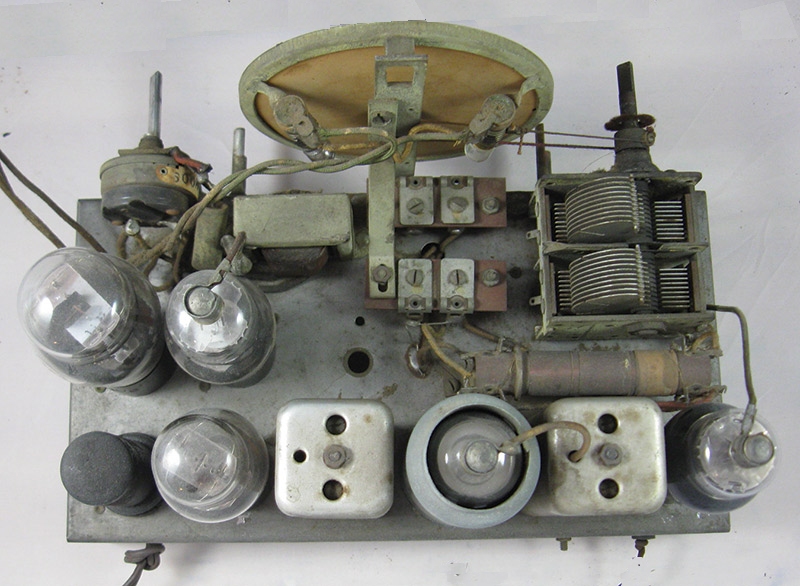
Early electronics used high voltages on chassis that were not always earthed. To operate them today as they were originally made can be dangerous. Early insulation materials predating PVC plastics such as rubber and wax break down over time. Power leads made from rubber wrapped in cotton will fail modern Test & tag inspections. This can force the choice as to whether a restoration is for looking at in a glass case or for using and enjoying.
Component Challenges
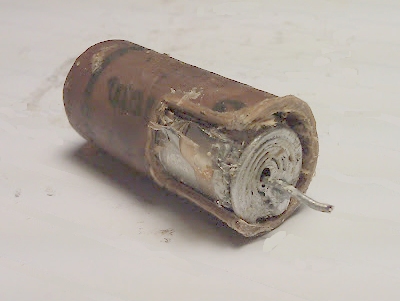
Early components have a ‘best before’ date. Capacitors were layers of paper and foil rolled up and dipped in wax. After 60-80 years many of these have simply broken down. Similarly many early radio products rely upon vacuum tubes which have slowly degraded as molecules of air have penetrated that vacuum. Sourcing viable replacement tubes can be difficult – or impossible.
Circuits and data
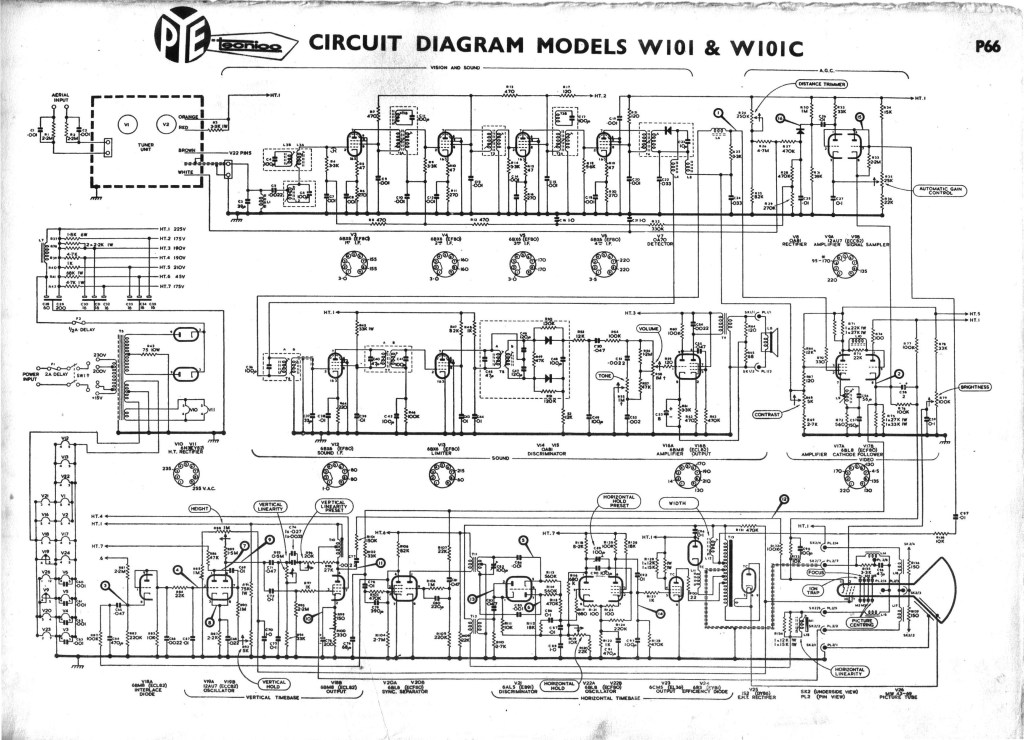
Like any technical equipment electrical restoration can be difficult without access to matching circuit diagrams and notes for that product. The internet is great for sourcing a lot of difficult to get information and it can make the difference between success and failure of a project.
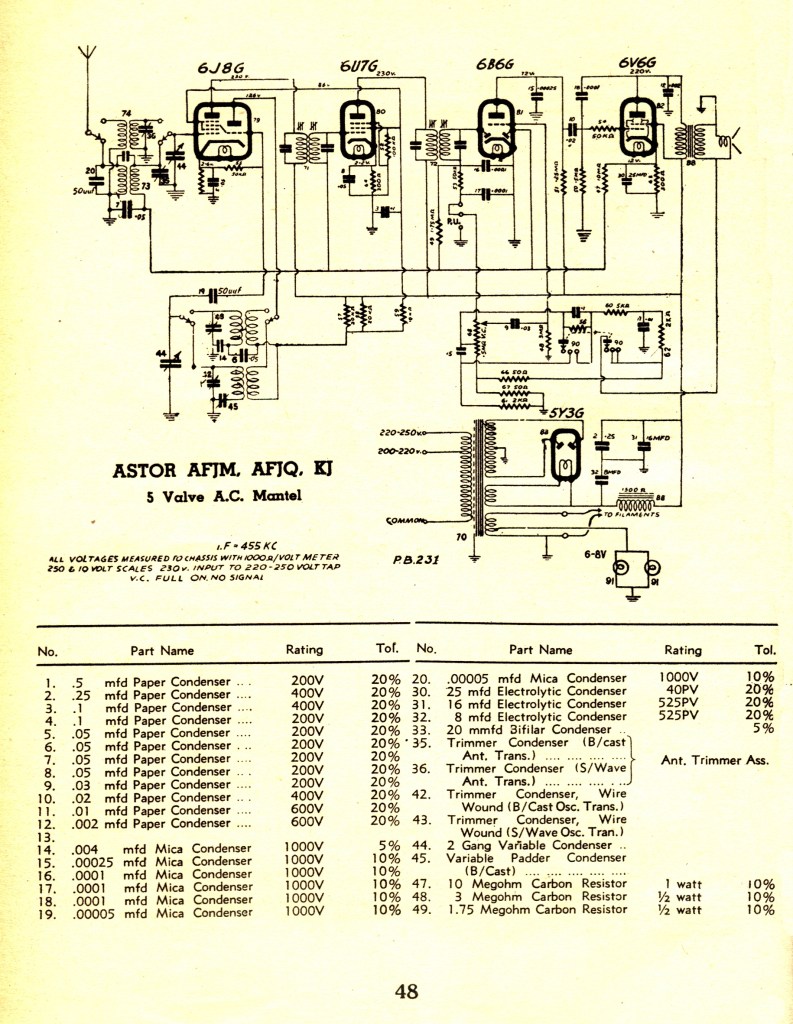
Using Modern technology to rescue a radio
Early materials in radio manufacture were Bakelite, casein and Perspex. Early plastics have become brittle and crumbled. With modern equipment we can scan defective irreplaceable parts and reproduce them through casting and 3D printing techniques. Dial faces crack, fade and become impossible to read, but there are solutions.
The image below shows the progression of scanning an original, but damaged AM receiver label, where digital image processing has been applied to clean it up to a near original condition where it can be laser printed onto polycarbonate film and be reintroduced to the radio with excellent results.
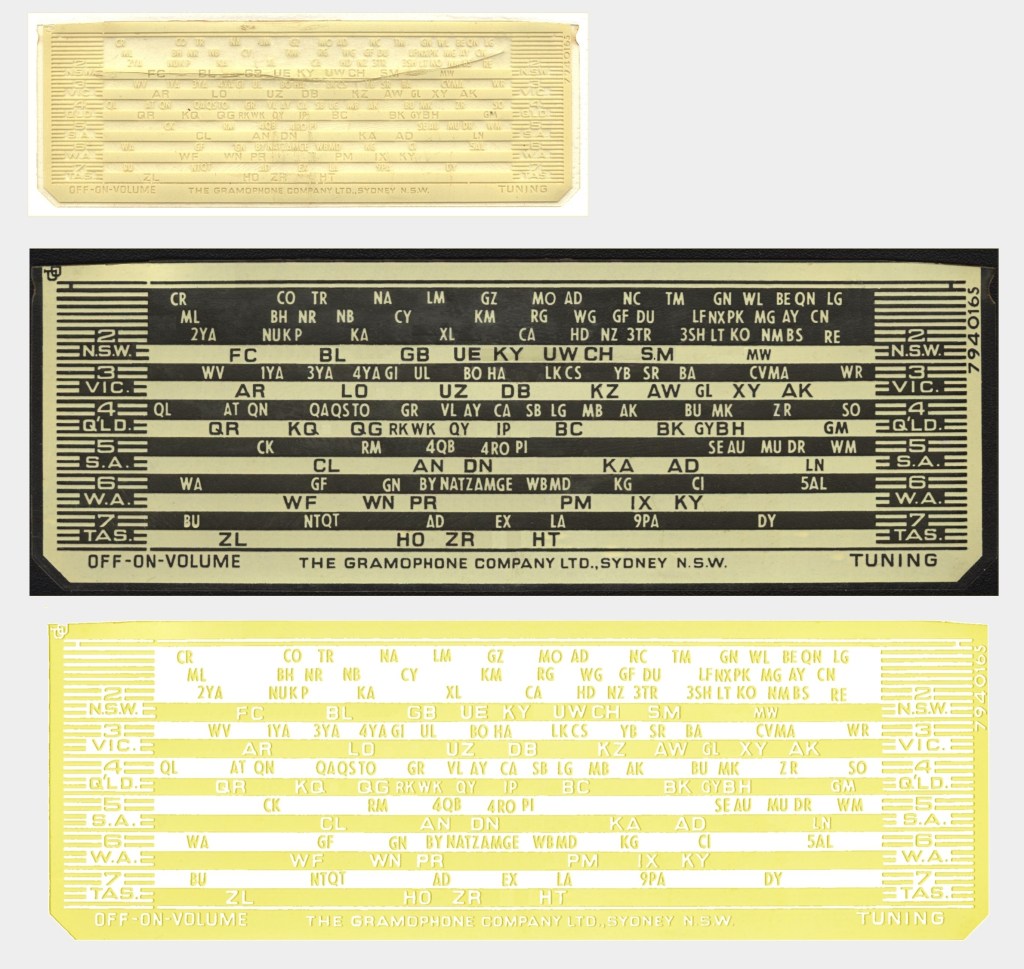
Inside radio equipment there are many important labels that are faded, water damaged and bug eaten. To move such labels can be to destroy them.
A photograph of a label taken inside a cabinet may look like this:
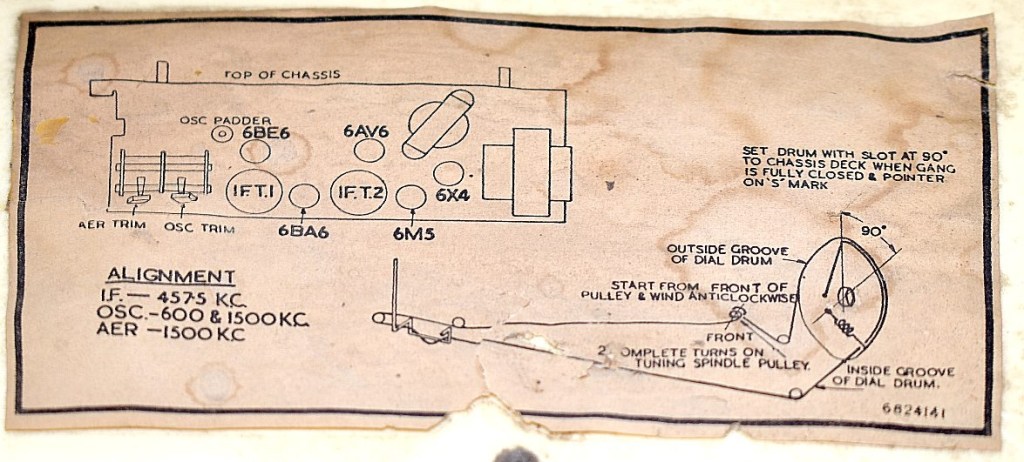
With image processing, the same label can be rebuilt and placed in a file to accompany the radio for prosperity.
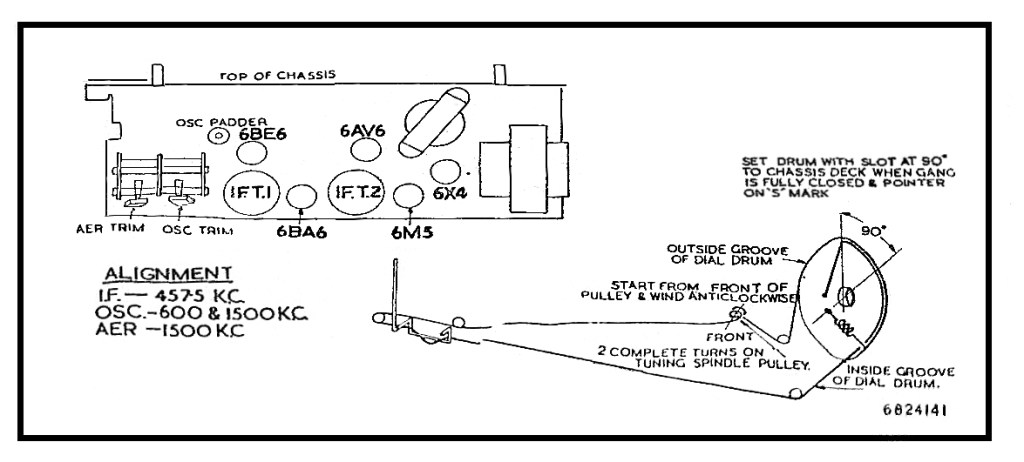
60% of restoration is cleaning – carefully
The three big killers of any potential restoration are Sunlight, which causes fading and embrittlement, Water which causes corrosion and rot, and Vermin, where small creatures eat or build nests in your treasured appliance. Any radio that has been stored for a long time can become a home for mice, rats and possums.
The act of cleaning is going to require some cleaning products. Some products are too harsh. Avoid abrasives and acetone which can cause a lot of damage if used incorrectly. Mild detergents and isopropyl alcohol are the safest compounds to use. Still, be aware that anything that was shellacked and not lacquered with a varnish may well start to dissolve in the presence of alcohol.
This Pye TV was purchased in Melbourne to watch the 1956 Olympics.
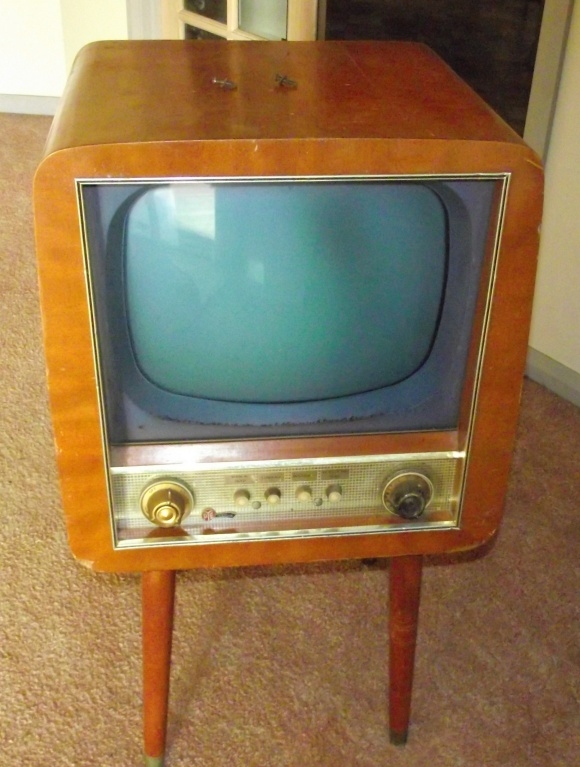
The original circuit was readily located via an internet search.
In 1964 it had to be modified to receive the extra tv station Channel O, as the original model was not designed to operate so low in the TV spectrum. It should go again, but first a rats nest had to be removed.

Useful Restoration Links
There are many interesting and useful sites for persons attempting a restoration. In January 2025 an article on HF Transceiver restoration titles ‘Boat Anchors’ was included within the QTC magazine.
https://qtcmag.com/books/rlgj/#p=13
An excellent site on the restoration process called Antique Radio is here:
https://antiqueradio.org/welcome.htm
This site shows a complete technical and cosmetic restoration project.
https://www.instructables.com/Rebuilding-an-old-AM-radio/
There are numerous forums offering advice and examples on the restoration process. https://antiqueradios.com/forums/
 This Is Amateur Radio