P263
Amateur Radio Educators & Assessors
From March 2024 Amateur Radio examinations in Australia are administered by the Australian Communications & Media Authority (ACMA). The examinations themselves are conducted by a network of volunteer Assessors that meet the criteria of ACMA requirements. Police checks and possession of a valid Working With Children card are required for all Assessors.
The ACMA website describes this process in detail: https://www.acma.gov.au/amateur-radio-accredited-assessors Persons interested in becoming an assessor can view the requirements from this site.
About Assessors
Assessments for Amateur Radio are free. Assessors and clubs that they may be associated with cannot charge for exam services.
There are two types of Assessor. There is a General and Specialist accreditation. General Assessors can conduct exams in person only. Specialist Assessors are permitted to conduct Remote Assessments using remote internet platforms for the exam.
Many clubs have one or more Assessors available to conduct exams. To contact an assessor close to your location, the ACMA have a search tool here: https://www.acma.gov.au/assessors This tool shows all Assessors in order, approximately 200 nationwide. A drop box may be used to reduce the length of the list to a specified state or territory.
Exam Types
The following exams usually conducted by Amateur Radio Assessors:
- The Foundation Theory & Regulations exam
- The Standard Theory & Regulations exam
- The practical assessment exam
- The Regulations-only exam
- The Advanced Theory exam (Does not include a Regulations component)
Details about the Practical Assessment may be found here:
https://thisisamateurradio.com/p80-the-amateur-radio-practical-assessment/
Recognition Certificates
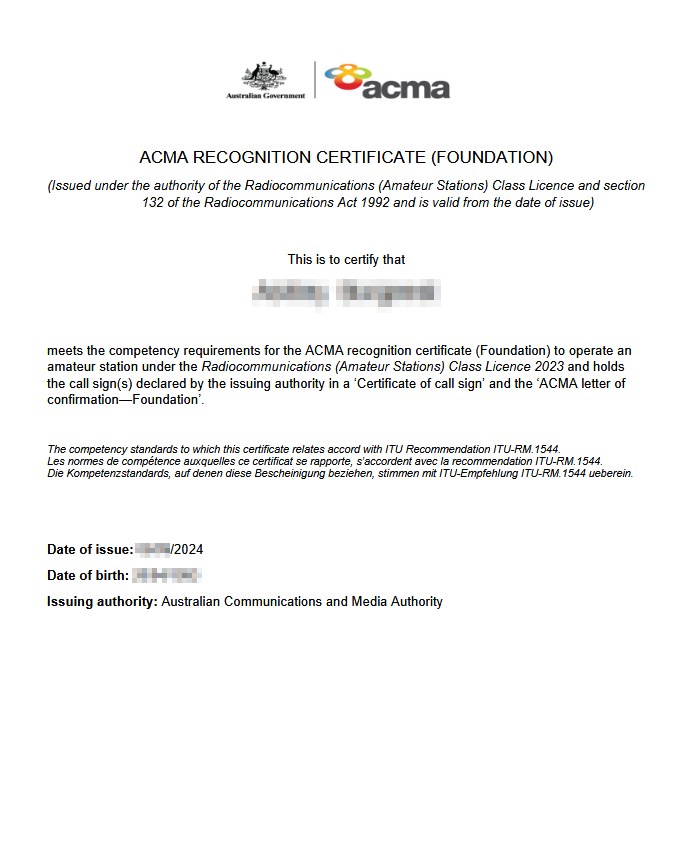
Successful candidates are able to apply to the ACMA for a Recognition Certificate for the Foundation, Standard or Advanced qualification. The ACMA charges a small fee for this certificate. This can be issued within a few days of the application and sometimes on the same day.
Callsign Applications
After a Recognition Certificate has been issued, candidates may then apply for a callsign. This callsign may be taken from a pool of the next available callsign, or by consultation with an ACMA database which can reveal if a given callsign is in use or available.
Follow this link for a Callsign search: https://www.acma.gov.au/are-you-looking-amateur-call-sign
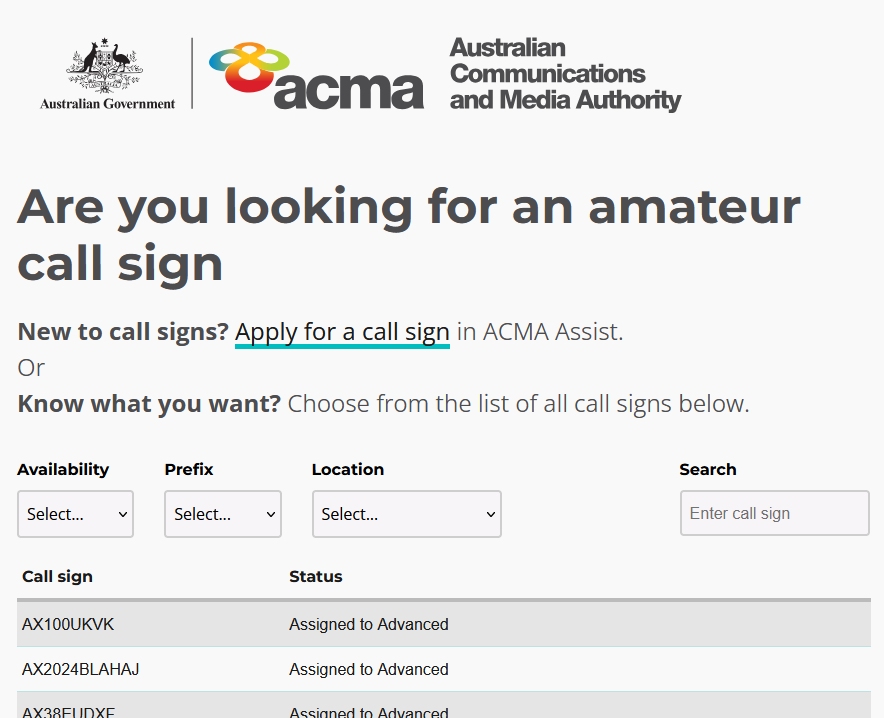
Note that two-letter callsigns (VKxnn) where x is a state identifier and nn is a letter from AA to ZZ are reserved for Advanced license holders. New operators are required to pay a callsign application fee to the ACMA when applying for a callsign. Once a callsign has been issued to a person, it is for life. There are no further costs involved. At approximately 5 year intervals, the ACMA may contact the callsign holder to confirm if it is still in use by that person.
ACMA Fees
ACMA Fees for certificates and callsigns may be adjusted over time. To discover the most up to date pricing, visit the ACMA website: https://www.acma.gov.au/amateur-radio-related-fees
Foundation License Studies
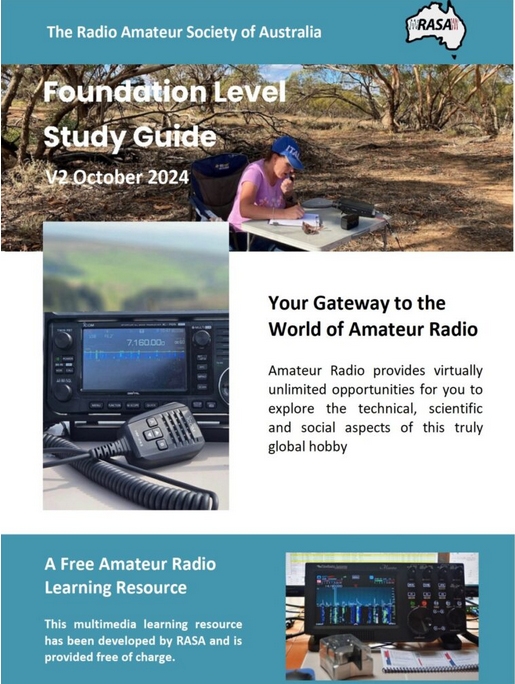
Candidates attempting to gain a Foundation License qualification can discover more detail by downloading the free book Foundation Level Study Guide (FLSG).
The last page of this book is reserved for clubs and individuals advertising their exam and training services.
This book may be downloaded from Here: https://vkradioamateurs.org/flsg/
 This Is Amateur Radio