
P40
Responding to Distress Signals
In the event that you hear a distress call, you must give that call and subsequent communications priority over all other transmissions.
A distress signal indicates that a person is threatened by grave and imminent danger and requires immediate assistance.
The distress signal consists of the word MAYDAY. Anyone hearing a ‘MAYDAY’ communication is responsible for noting the nature and details of the emergency and for passing the information on to an appropriate authority.
Examples might include a sinking fishing boat in Port Phillip Bay, or a life threatening injury to a hiker in the bush.

PAN-PAN is used for urgent situations not requiring a MAYDAY. Examples might include a fishing boat with a failed engine, not facing immediate danger, but requiring emergency services assistance, or a non-life threatening injury to a hiker in the bush, which may prevent them from returning to safety without assistance.
These communications must receive priority and must be reported to an appropriate authority.
Follow this link for more information from the ACMA:
https://www.acma.gov.au/amateur-radio-operating-procedures#distress-and-safety-procedures
The Foundation Level Study Guide
All Blue Tiles form part of the syllabus for the Foundation Level Recognition Certificate (operator licence). A primary source of information for many of the blue tile topics can be found within the Foundation Level Study Guide. This is a free download available at:
https://vkradioamateurs.org/flsg/ This is a digital book and contains many links to other resources and explanatory videos.
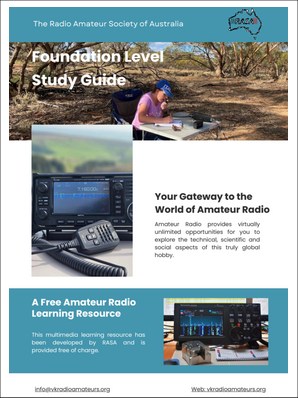
Information on Distress and Urgency signals can be found from Chapter 2, Page 11 in this book

ACMA Syllabus Extract
According to the ACMA Foundation Syllabus, the required knowledge on this topic is:
2.3 Communications by Amateur Stations
Recall that, except in relation to a distress or emergency situation, or participating in emergency services operations or training exercises, the Amateur Class Licence only authorises amateur-to-amateur communications.
2.5 Distress and urgency signals
Recall that distress communications are signalled by the use of ‘MAYDAY’ and that these communications have priority over all other communications.
Recall that anyone hearing a ‘MAYDAY’ communication is responsible for passing the information on to an appropriate authority.
Recall that some urgent situations not warranting the use of ‘MAYDAY’ are signalled by the use of ‘PAN-PAN’.
Recall that these communications should receive priority and should be reported to an appropriate authority.
 This Is Amateur Radio