
P54
The Importance of Antenna Polarisation
Antenna polarisation is an important concept. In essence it means that the transmit and receive antennas should have matching orientation.
Vertical antennas will perform best when in contact with other vertical antennas. Horizontal antennas will perform best with other horizontal antennas.
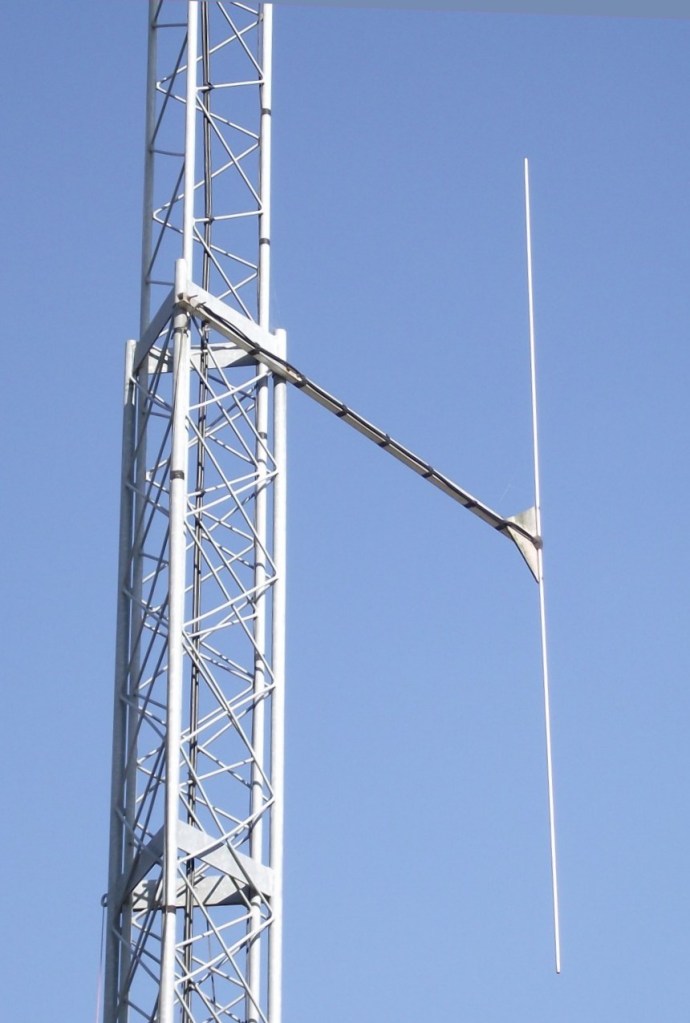
There are more specialised antennas used on UHF and higher which feature Circular Polarisation. This in turn may be sub-categorised as being clockwise circularly polarised and anti-clockwise circular polarised. Again Transmitter and receiver antennas must be matched in order to optimise signal quality.
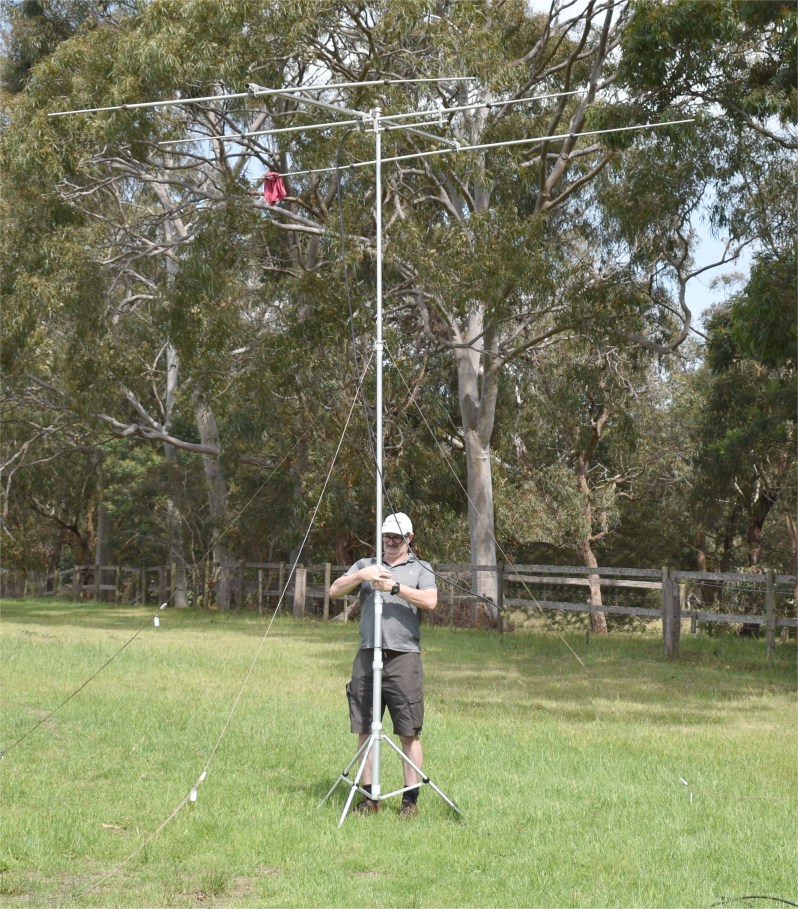
If one antenna is vertical and the other horizontal, the signal losses between the two antennas can be significant. This can be as much as 20-30 dB of signal loss. However, it is worth noting that long distance signals that skip around the world can change polarisation with each reflection/refraction. For this reason, some stations use both horizontal and vertical antennas, switching between them to find the optimum signal for a given path.
The video clip below has a simplified description of antenna polarisation
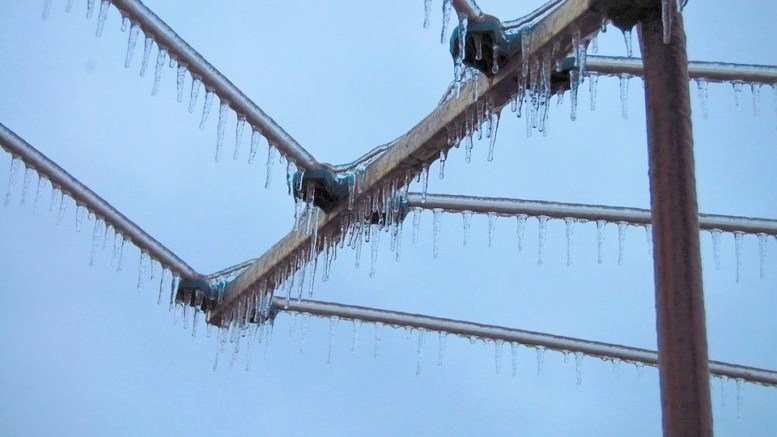
In colder climates there is an advantage associated with vertical antennas, as snow and ice is less likely to form on a vertical antenna than a horizontal one. A build-up of ice can affect antenna tuning and output level.
ACMA Syllabus Extract
According to the ACMA Foundation Syllabus, the required knowledge on this topic is:
5.8 Antenna Directional Characteristics
Recall the meaning of the terms: polarization, omni-directional, bi-directional, unidirectional and gain as they apply to antennas.
5.9 Polarisation
Recall that the polarisation and directivity of an antenna is determined by its physical construction and orientation.
 This Is Amateur Radio