P57
RF Filters & Ferrites
As operators of the radio spectrum, we want incoming and outgoing transmissions to be heard and we want to block sources of noise that may interfere with that activity. This is where filters come in. There are two ways filters are used. We can reduce or remove noise sources that will interfere with what we wish to hear and we can use them to limit the effect we may have on people and systems while we transmit.
Having an awareness of interference issues and acquiring the skills to treat them are an integral part of our hobby..
The peculiar nature of Ferrite materials
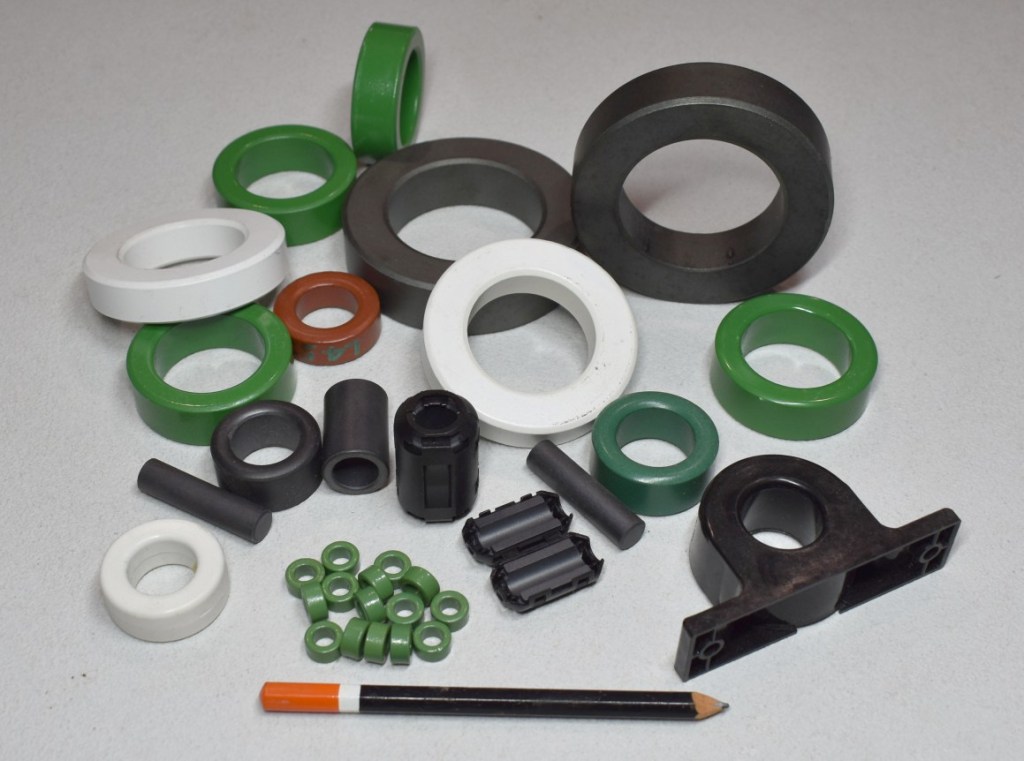
Ferrite materials exhibit some unique behaviour. They are composites of powdered iron and other elements cast into useful shapes such as rings, clamps and rods.
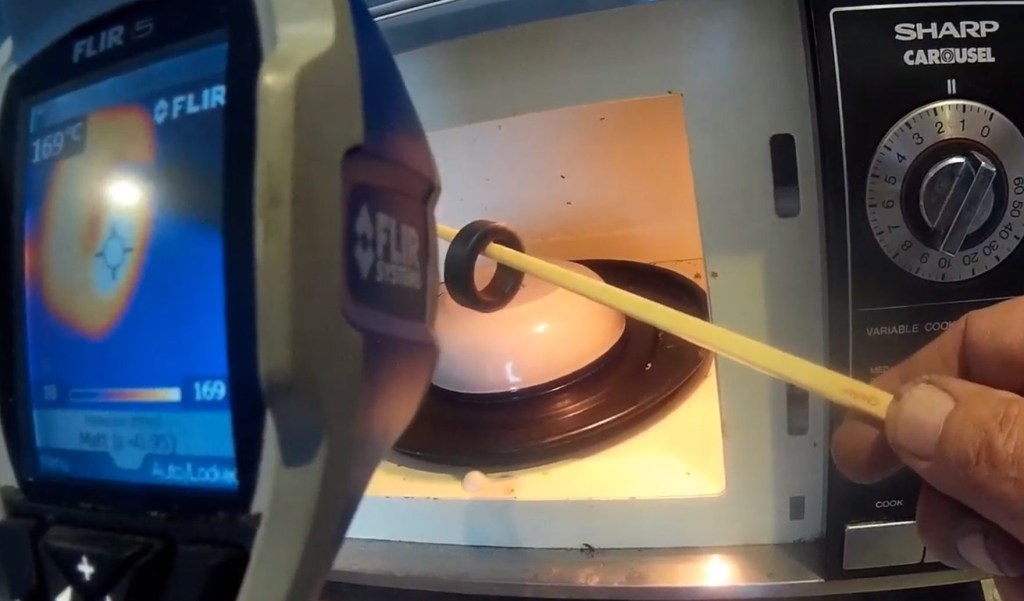
Normal metals simply reflect radio frequencies. Ferrite materials will absorb, dissipate and sometimes transform electromagnetic radiation. There are different types of ferrite substances. The exact composition of the trace metals determine the radio frequency range most readily absorbed. This effect can be seen when ferrite materials are placed in a microwave oven. Unlike the surrounding metal, the ferrites absorb the microwave radiation and becomes extremely hot.
The infrared image below shows a ferrite ring placed in a microwave oven, rapidly reaching temperatures of 169º C
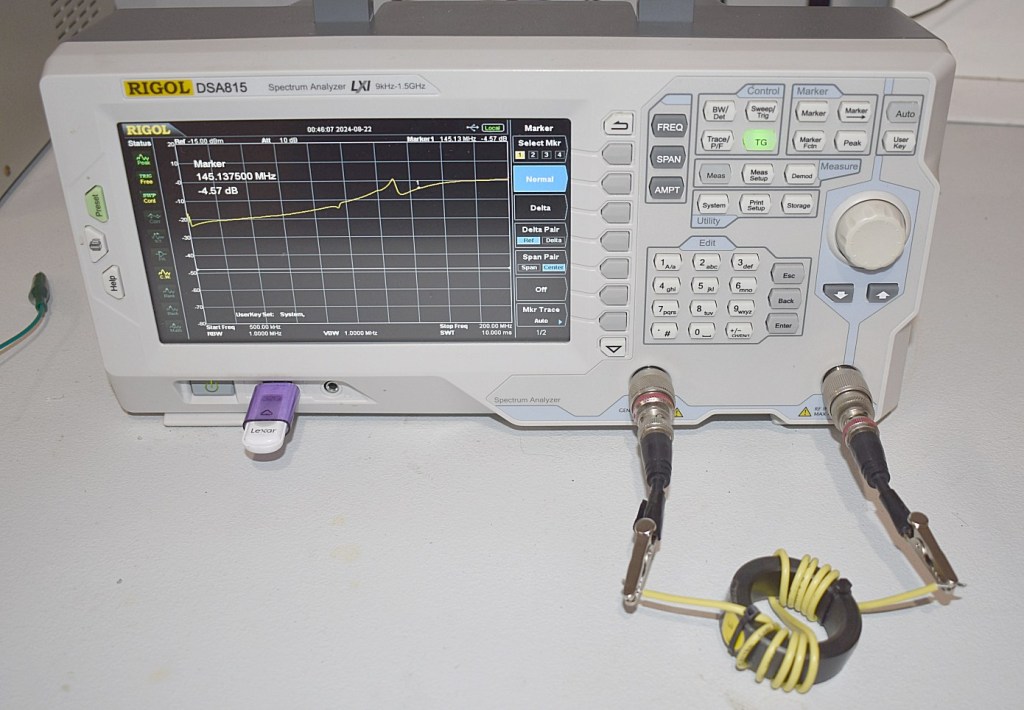
The characteristics of a ferrite item cannot be determined simply by looking at it. We rely upon correct labelling by the company selling the product, or by analysis with test equipment.
This image shows a Spectrum Analyser and Tracking Generator being used to sweep the radio spectrum and profiling a ferrite ring filter to map its frequency vs absorption curve.
Interference to Radio Amateurs from different sources
It is not uncommon to turn on a radio and find that there is a solid noise source across much of the HF spectrum. A lot of this is caused by power supplies, LED Lamps, battery chargers and solar inverters. Sometimes because the original design was poor and sometimes because filter capacitors inside have aged and no longer dissipate switching noise.
There is a proper process to determine the origin of a noise source. These steps are described on the QRM Guru website. https://qrm.guru/ where the interactive flow chart (copy below) will help you to find the source.
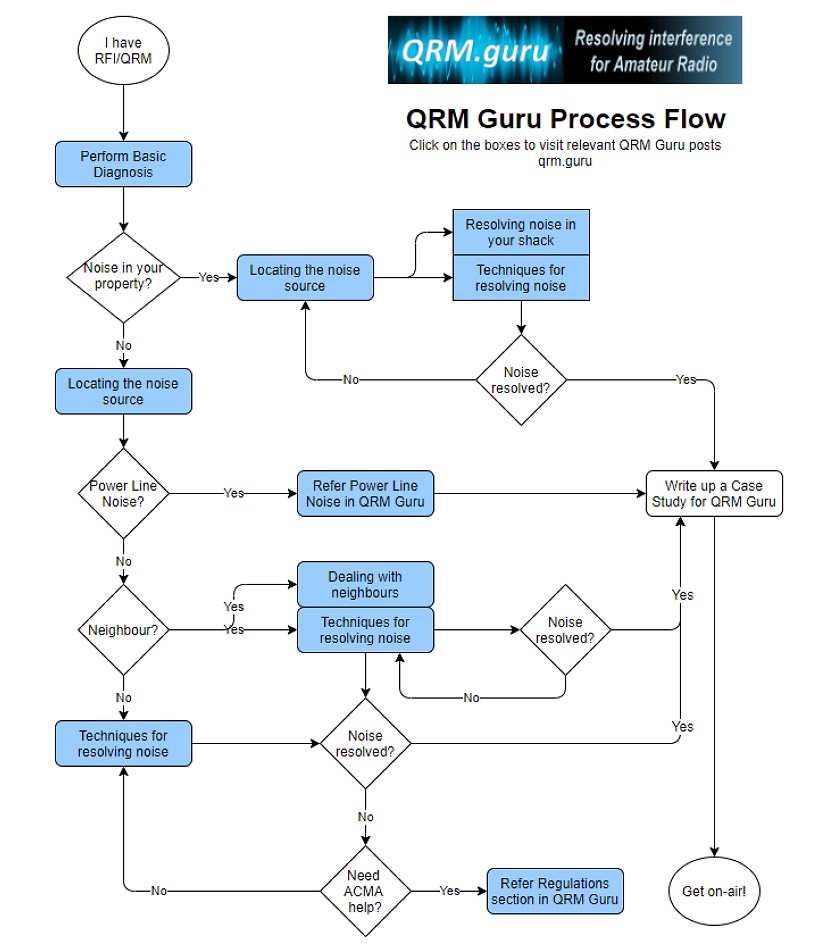
This may entail ferrite rings or clamps to be placed as close as possible to the offending noise source. It may also entail the provision of improved grounding of a device to stop unwanted radiation.
This short clip describes the interference problem and what may be done to alleviate it.
Interference from Amateur transmissions upon other systems.
Normally transmissions from an Amateur station will not affect other services, but there are instances where equipment is insufficiently grounded, shielded or filtered and can be impacted by Amateur transmissions. For example speaker leads on a hifi system can behave like an antenna for HF transmissions. A small value of capacitance placed across the speaker terminals can suppress this issue without affecting audio quality.
Home internet services can sometimes be disrupted by nearby HF transmissions.
Click Here to read about a case study where interference to an NBN Telstra modem was eliminated:
Constructing a simple RF Choke
Resolving interference may be as simple as winding a power cable three times around a ferrite rod. This is often the basis of a Foundation Level exam question. Here is a video clip on preparing a choke on an antenna feedline. The same method can be applied to power, phone line and internet cables.
Note that there is a separate tile on this topic with additional detail (P59)
Visit QRM Guru
The topic of interference filtering and mitigation is a large one. In 2018 a website was established specifically aimed at resolving interference problems for Amateur stations. It is a knowledge based site, meaning that key words and clues may be entered to bring up data, case studies and video clips relevant to the search topic.
Click Here to visit the QRM.Guru site, or Here for a video walk through of the site.

ACMA Syllabus Extract
According to the ACMA Foundation Syllabus, the required knowledge on this topic is:
7.9 Filters
Recall that the immunity of most types of equipment can be increased by fitting suitable filters in external cabling, such as antenna, power supply or interconnections between equipment.
Recall that the filters should be fitted as close to the affected devices as possible.
7.10 Simple Choke Filter
Recall how to construct a simple RF ‘choke’ filter using a ferrite rod or toroid.
 This Is Amateur Radio