
P58
Sensitivity vs Selectivity in Receivers
Sensitivity, Selectivity and Stability in Receivers
A Receiver allows a person to hear a radio signal. That much is simple, but there are some terms relating to receivers that tell us how well they work.
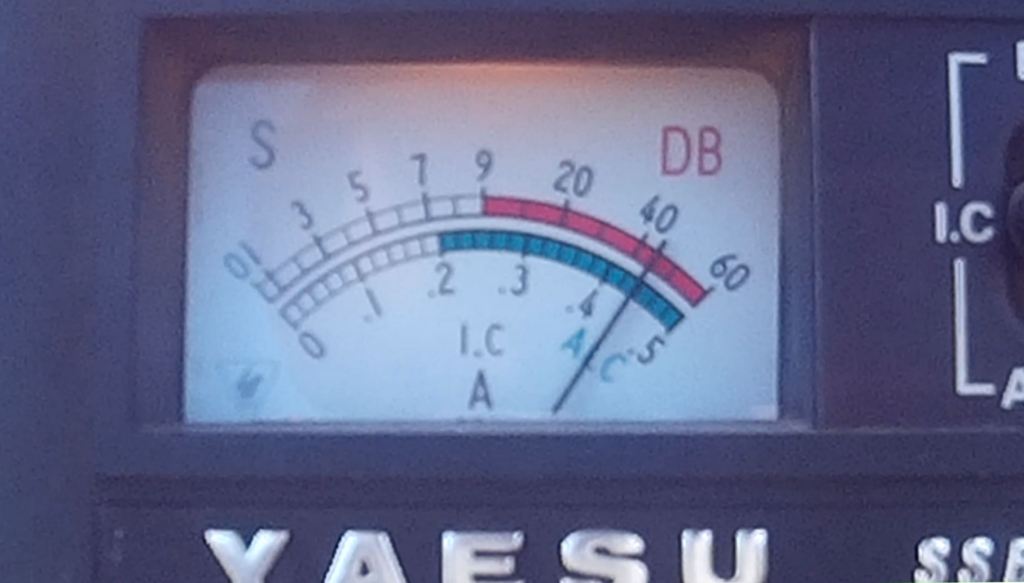
Sensitivity is the easy one. A Sensitive receiver can pick up faint signals. A non-sensitive receiver can only hear strong stations. Good sensitivity, the ability to pick up faint stations, is a quality we look for in a receiver.
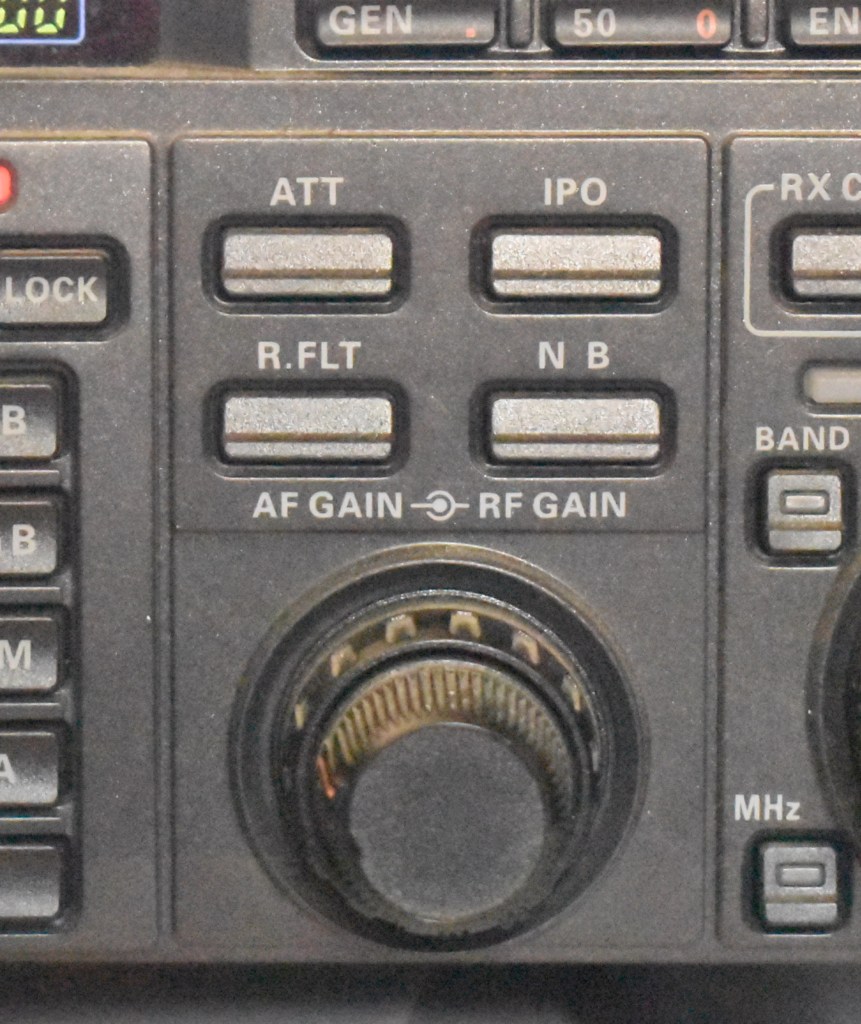
Where signals are extremely strong into a receiver, some distortion can be introduced. For this reason most communications receivers have a control to manually reduce the receiver sensitivity. This may be a fixed level of sensitivity reduction via a switch called an RF Attenuator (ATT), or via a variable control, usually labeled RF Gain.
The Volume Control in a receiver, sometimes labeled AF Gain (Audio Frequency Gain) does not affect the actual receiver sensitivity, it only changes the volume of sound applied to the loudspeaker.
Selectivity relates to how selective the receiver can be. There may be three AM radio stations close together in frequency. A radio with poor selectivity may hear all three stations at the same time. A radio with better selectivity can tune to just one station and eliminate signals from nearby stations. Good Selectivity is another quality we look for in a receiver.
Some receivers have switchable filters to manually reduce the receiver frequency range, or ‘bandwidth’. This can be useful for reducing noise levels affecting narrow bandwidth transmissions like CW (Morse code) or RTTY (Radioteletype)
Stability is a third quality attribute. Essentially it is the ability of a receiver to stay exactly on the frequency where we want it to be and not have it drift to other frequencies over time. Modern receivers using digital frequency management are extremely stable. Earlier analog style receivers would often be subject to drift as a freshly powered up radio ‘warmed up’.
A related control often found on receivers is a Noise Blanker, often labelled as NB. This is a form of filter that will suppress fast rise time or impulse noises that can upset otherwise clear signals. These filters are effective with interference signals such as electric fences on farms and nearby vehicle ignition noise, but do little to reduce constant noise sources.
The Foundation Level Study Guide
All Blue Tiles form part of the syllabus for the Foundation Level Recognition Certificate (operator licence). A primary source of information for many of the blue tile topics can be found within the Foundation Level Study Guide. This is a free download available at:
https://vkradioamateurs.org/flsg/ This is a digital book and contains many links to other resources and explanatory videos.

Information about these receiver terms relevant to Foundation Level Qualifications can be found in this book from Chapter 4, on Page 29
ACMA Syllabus Extract
According to the ACMA Foundation Syllabus, the required knowledge on this topic is:
4.1 Block or Concept diagrams of simple Transmitters and Receivers
Identify, using supplied block diagrams, the names of the stages in a simple transmitter and receiver.
4.10 Transceiver Controls
Recall the purpose of the following controls: AF Gain, RF Gain, Squelch, Mode, VFO, RIT, Band and Carrier control.
6.3 Communication range
Recall that communication range at VHF/UHF is dependent on antenna height, a clear path, transmitter power and receiver sensitivity
 This Is Amateur Radio