P61
Identifying Antenna Cables
Know your Transmission Lines
One of the requirements of the Foundation Practical assessment is to correctly identify some of the popular cables that go between a radio and an antenna.
We need to understand the difference between a Balanced and an Un-balanced feedline.
Unbalanced vs Balanced Feedlines
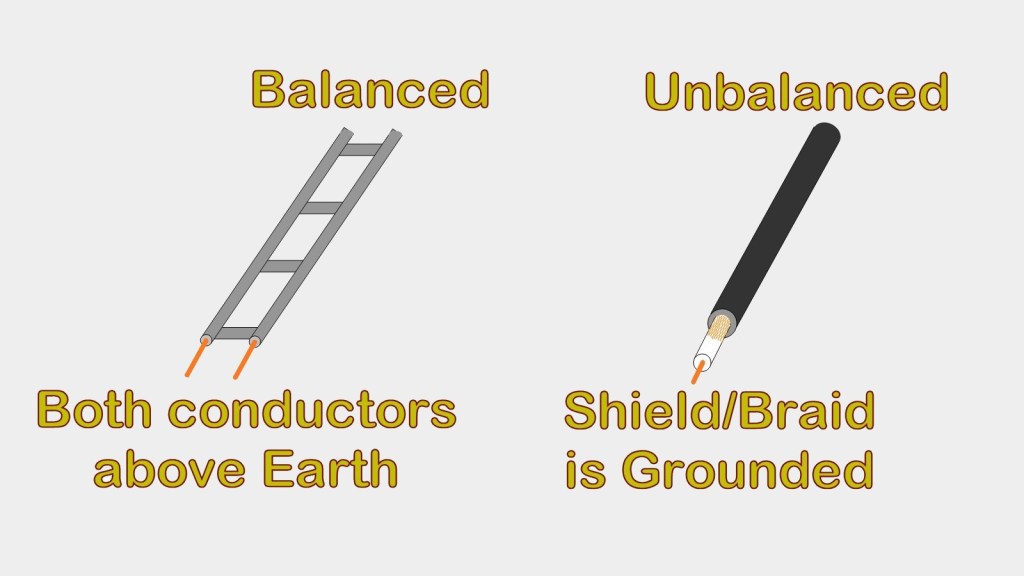
The Balanced feedlines have two wires above ground potential. This is often referred to as ‘Ladder-line’. This cable type has a relatively high impedance of 300 to 600 ohms, depending upon conductor size and spacing. The losses through this cable type are low, but only if there is sufficient separation of 100 to 200 mm between the cable and any building or supporting structure.
Unbalanced Feedlines usually refer to coaxial cable. With this cable type the signal is conveyed through the centre conductor and surrounded by an outer shield of braided copper or foil. This shield conductor is bonded to an earth connection.
Losses vary with the size and quality of coax cable, but it has the advantage that it may be placed in close proximity to towers and metallic structures without compromising the cable impedance. This makes coax cable excellent for automotive installations.
This image highlights the physical difference between the cable types:
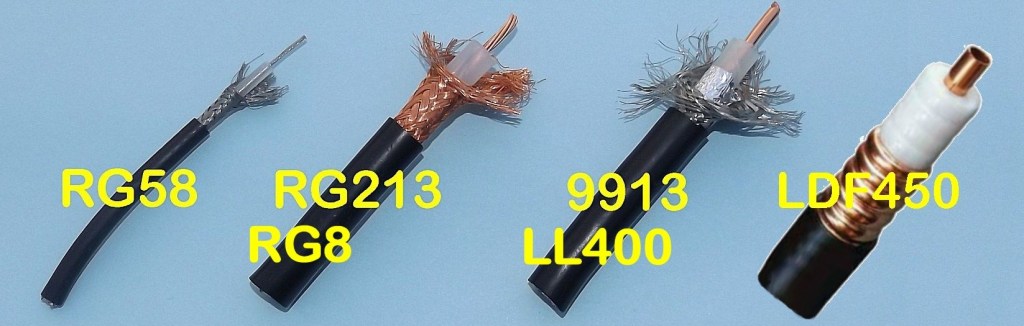
The image below shows the most common coax cable types. All of these types have the same characteristic of 50 Ohms, which provides direct compatibility with most radios.
For short-medium cable runs on HF frequencies, the thinner RG58 cable is fine. For longer runs, or for use with VHF/UHF stations, the lower loss RG8/RG213 cable is a better choice.
For further reading on how these feedlines actually perform, check out this QTC magazine article from 2020:
https://www.qtcmag.com/books/htkv/#p=26
The Balun
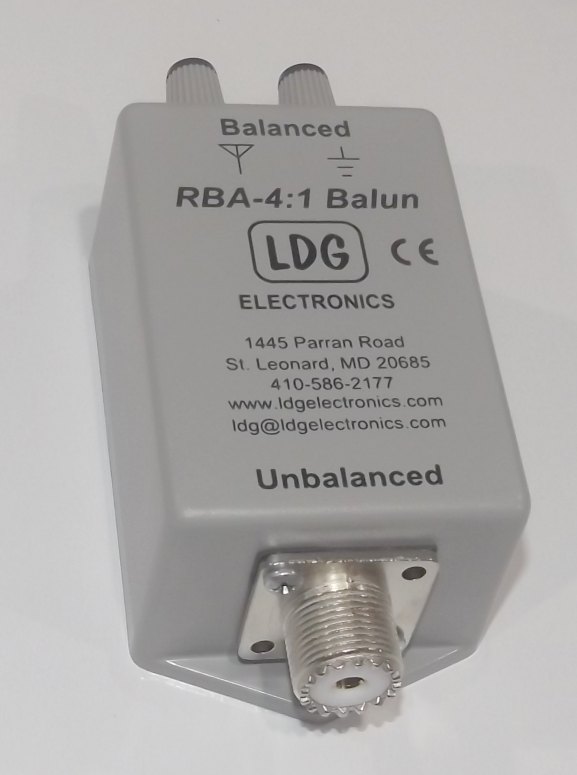
A flat Balanced cable cannot be connected directly to an unbalanced coax cable, as it would provide a poor match. To join cables with a correct impedance match a device called a Balun (balanced-to-unbalanced) is required.
Baluns are a large topic and are covered in more detail on a separate page.
https://thisisamateurradio.com/p71-antenna-matching-with-a-balun/
This brief video summarises the differences between cable types:
The Foundation Level Study Guide
All Blue Tiles form part of the syllabus for the Foundation Level Recognition Certificate (operator licence). A primary source of information for many of the blue tile topics can be found within the Foundation Level Study Guide. This is a free download available at:
https://vkradioamateurs.org/flsg/ This is a digital book and contains many links to other resources and explanatory videos.
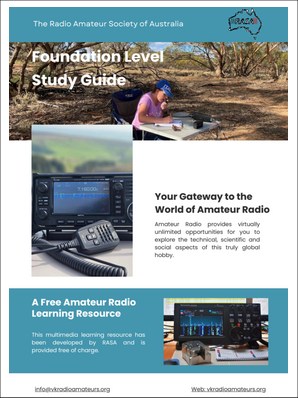
Information about Antenna Feedlines relevant to Foundation Level Qualifications can be found in this book from Chapter 5, on Pages 37 to 40
ACMA Syllabus Extract
According to the ACMA Foundation Syllabus, the required knowledge on this topic is:
5.1 Types of Transmission Lines
Identify from a supplied diagram, photograph or physical examples, common co-axial and balanced transmission lines. Recall their typical characteristic impedance.
5.13 Baluns
Recall that when feeding a balanced antenna with an unbalanced transmission line (co-axial cable), the preferred practice is to use a balun.
 This Is Amateur Radio