
P69
Interference Prevention Principles
Amateur Radio looses its appeal if every time a radio is turned on, all that can be heard is a roar of static. We now live in an environment where we are surrounded by potential noise sources, any one of which has the capacity to cause chaos to a receiver.
In the past when the problem was less pronounced, there were process for complaint and some level of action could take place through national communications departments. Today these departments are poorly staffed and there are no guarantees of support. It is incumbent of Amateur operators to identify noise sources themselves and either resolve the problem directly, or delegate the issue to a party with the authority to react.
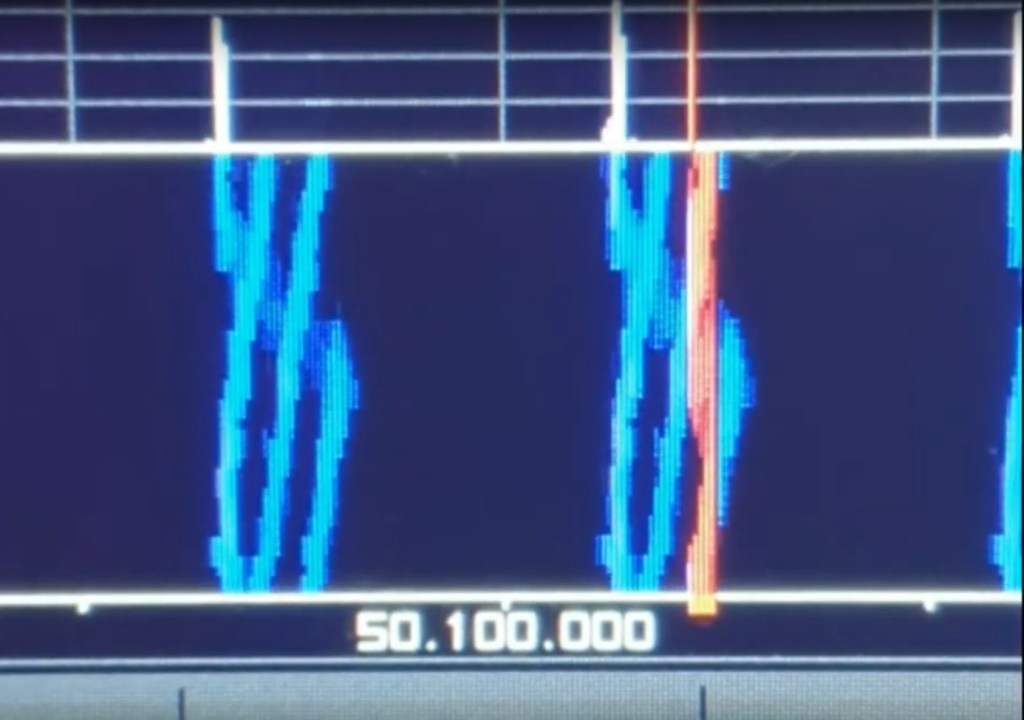
The identification and minimization of noise has in effect become another branch of the hobby. Like all other aspects of radio, there are effective approaches to follow and new skill sets to acquire. Peculiar noise patterns can be difficult to locate, like this oddly rotating spa heater noise on 6 metres (below), but there is always a cause if you look for it.
A comprehensive web site dedicated to this issue has been assisting amateur operators since 2018. https://qrm.guru/ Here we will examine some methods described on this site for the detection and identification of noise sources.
This page is dedicated to actions that will reduce or eliminate noise. For tracking the noise sources visit this page: https://thisisamateurradio.com/p67-sources-of-radio-interference/
Reducing Natural Noise
When searching for sources of noise a distinction was made between locating Natural or Man Made noise sources. For most part, Natural noise sources have no easy cure, but some steps can reduce the effects.
- Most naturally occurring noise tends to be vertically polarised. Replacing a vertical antenna with a horizontal antenna can help to reduce background noise.
- Where the origin of natural noise comes from a particular region or direction, re-orienting the antenna for a noise null can assist in noise reduction.
- Tests have shown that in dipole antennas if there is a mismatch or direct coupling of an unbalanced feedline to a balanced antenna, that the feedline itself becomes a receptor of noise. A 10-20% of naturally occurring noise can be achieved when a proper toroidal balun is at the feedpoint of the antenna and a toroidal choke is applied to the feedline, just below the antenna feedpoint.
Here is a short video that describes how to prepare a feedline choke:
Reducing Man made Noise
This sounds like a single topic but rapidly it breaks down into many sub categories. The simplest division is to assess whether the noise source emanating from your own home, where it is relatively easy to directly attack the issue, or is it coming from outside the home where a neighbour or utility company can simply their arms and tell you to go away, or worse.
Profile the noise first
It is possible to tell a lot about the noise just by listening to it. Is it stable there all of the time unchanging, or does it vary by some kind of external influence. Temperature? Rainy days? Wind levels? Time of day? Day of week? Repetitive or stable signature? Changing rapidly? Dawn-dusk synchronization? Christmas lights? It could even be something like off-peak hot water boosting
Keep an open mind. Make notes often and look for emerging patterns. Even if you can’t figure out what it is, you can start to make a list of what it isn’t.
Home Noise
The easiest way to determine whether a noise is coming from your home is to operate your receiver from a battery, then kill all the power in your home and garage. If the noise does not go away, then you can stop looking for it in your home. If the noise does go away, restore power (and the noise) and turn things off one at a time. It should be possible to find the offending appliance.
Here is a brief montage of some common interference sources:
Assuming a device has been identified, you have choices of repairing the item or destroying/replacing the item. Repairing the item can be hard work, particularly if it is the result of poor design to begin with. A DVD player on standby at one end of the house can wipe out a HF radio at the other end of the house. Outright replacing the item is often cheaper than trying to treat the device.
The https://qrm.guru/ site lists many different case studies and solutions that can assist here. It is a Knowledge-Based site, which means its internal search engine can pull up articles and solutions by entering key words into the search window.
There is an introductory YouTube clip to help people to get started with this resource.
Using Ferrites to remove noise
It is worthwhile purchasing a cross-section of ferrite clamps and rings which will allow the homeowner to experiment with various attempts at noise reduction. Even a basic HDMI cable on a laptop PC can be a source of noise on a nearby HF receiver.
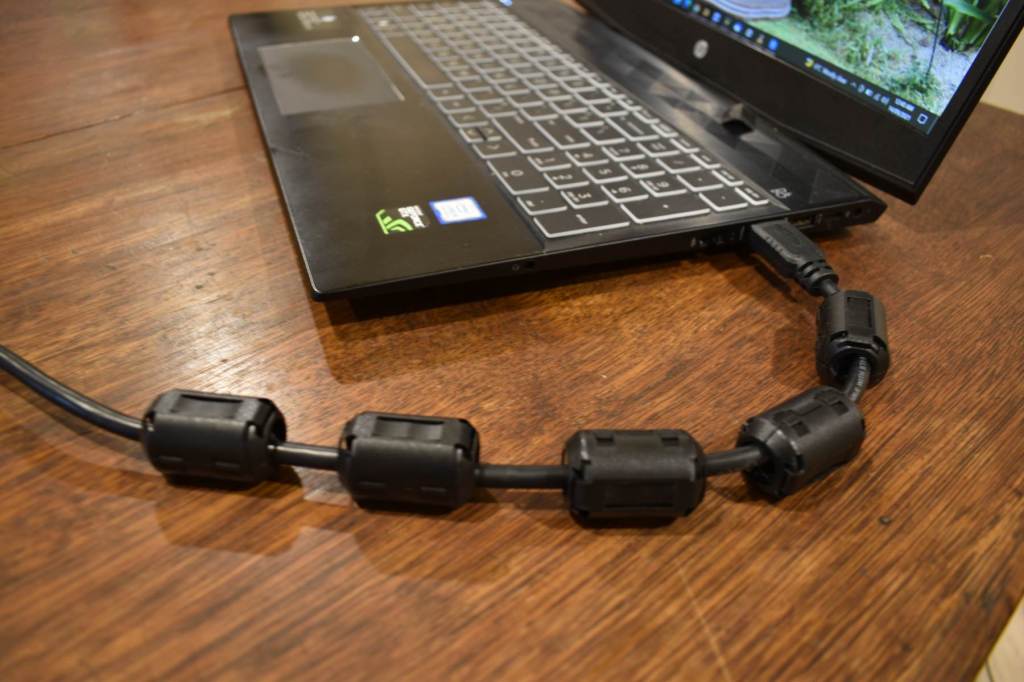
Some of these ferrite combinations are non-intuitive, so readers are advised to take a look at this clip on Ferrite Effectiveness:
External Noise Sources
After having completed a search process a noise source may be attributed to an adjacent property. There are only a limited number of actions that can take place if the neighbour is uncooperative. The best way forward is to invoke the self-interest of the owner.
- Indicate that the noise source in their home will probably be harming their Wi-Fi and internet speeds around their home. (This is often the case).
- Indicate that strong noise sources are often caused by decaying equipment that is overheating and a possible house-fire risk. (case studies have shown occasions where old noisy battery chargers etc. were extremely hot and close to self-ignition)
- Check your AM broadcast bands to see if they are also being interfered with by the neighbour. This is often stronger grounds for the ACMA to take action against a nearby offender rather than calling the issue a problem for your amateur radio station.
The Look Up and Live Website
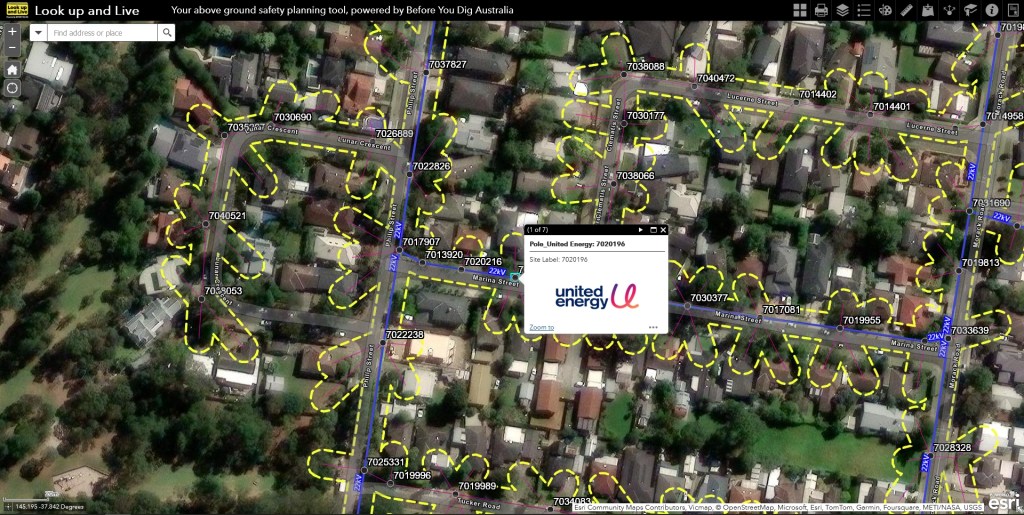
A great way to research the identity of power line infrastructure within several Australian states is to visit the Look Up and Live website. This will show the item code of every pole and tower and who owns it.
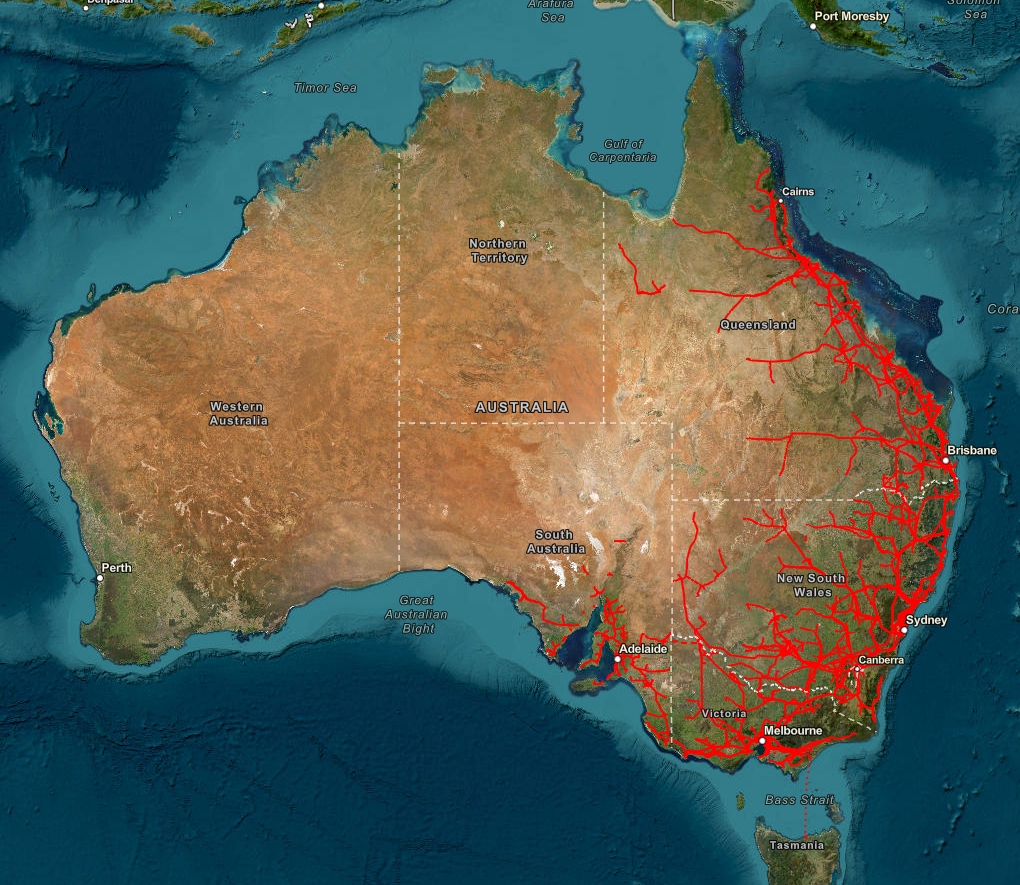
From this map the viewer can zoom into street level and identify individual power poles. Click on the items to reveal the responsible agency. The site may be accessed via:
https://byda.maps.arcgis.com/apps/webappviewer/index.html?id=8a8f088ca9774464884d6711b347fff8
Utility company Complaints processes
Most infrastructure hardware has a reference number, such as every power pole. This can be used to identify the likely noise source to a utility company.
Reporting a faulty item of noisy infrastructure can be complex. Sometimes a company will fob off initial contact and just hope that the complainant will go away. If a noise emanating from a power line or similar there is a legal obligation for service providers to pursue a solution.
Here is an instructional video clip which describes this process:
Noise Cancelling Technology
There is technology available that can reduce high levels of noise under certain circumstances. It is not good for noise coming from multiple sources or from a broad direction, but where there is a specific noise out of your control. A good example of this is where a neighbour has a noisy plasma TV and is not cooperative in doing anything about it. Noise Cancelling units have a sense antenna to receive a sample of noise then feed it back to your radio out of phase with the source noise. This can provide substantial noise reduction.
Here is a clip which describes where and how this equipment can be used.
Eliminating noise –the skill you need to refine
This page should help anyone wanting to reduce their noise levels at home and to have a better understanding about what may be done about it.
High noise levels can be annoying and frustrating, but there are actions and treatments that will improve most situations.
ACMA Syllabus Extract
According to the ACMA Foundation Syllabus, the required knowledge on this topic is:
7.1 Sources of Radio Interference
Recall that broadcast radio and television receivers can suffer interference from local sources, including electrical and electronic equipment and high voltage electricity supply lines, as well as from than radiocommunications transmitters.
7.4 Interference and electromagnetic compatibility (EMC)
Recall that the ability of electronic or radio equipment to operate properly, without interference, in the presence of electromagnetic radiation, such as radiocommunications transmissions, refers to the EMC of the equipment. This is also known as the equipment’s radiofrequency immunity.
7.5 Interference Pathways
Recall that radiocommunications transmissions that are the source of interference, may be induced into nearby electronic or radio equipment through conduction along electrical mains wiring or from direct pickup by the equipment.
7.8 Transmission Modes and Interference
Recall that some transmission modes are more likely than others to cause objectionable interference to broadcast radio and television reception and to telephones.
7.9 Filters
Recall that the immunity of most types of equipment can be increased by fitting suitable filters in external cabling, such as antenna, power supply or interconnections between equipment.
Recall that the filters should be fitted as close to the affected devices as possible.
7.10 Simple Choke Filter
Recall how to construct a simple RF ‘choke’ filter using a ferrite rod or toroid.
7.11 RF Earthing
Recall that the function of the RF earth connection in an amateur station is to provide a path to ground to minimise RF currents entering the mains earth system and causing interference to other electronic equipment.
Identify, from supplied diagrams, the symbol representing an earth connection.
7.12 Diplomacy and EMC
Recall that EMC problems have the potential for causing neighbourhood disputes. Understand the need for diplomacy, the sources of advice available and the role of the ACMA.
7.13 Harmful interference
Recall that a licensee must not operate an amateur station if its operation causes harmful interference to radiocommunication services.
 This Is Amateur Radio