
P78
Transmitter Receiver Controls
There are hundreds of different model radios in use. Where a single unit has both a Transmitter and a Receiver, it is called a ‘Transceiver’. Most radios in use by Amateurs are classified as Transceivers.
Differences in branding
The names used for the various controls have evolved over time and some brands of radios use different terms for the same function. For example Kenwood transceivers have a feature called a Receiver Incremental Tuner or RIT to trim the receive frequency without changing the transmit frequency. Yaesu transceivers have the same feature, but they call it a ‘Clarifier’.
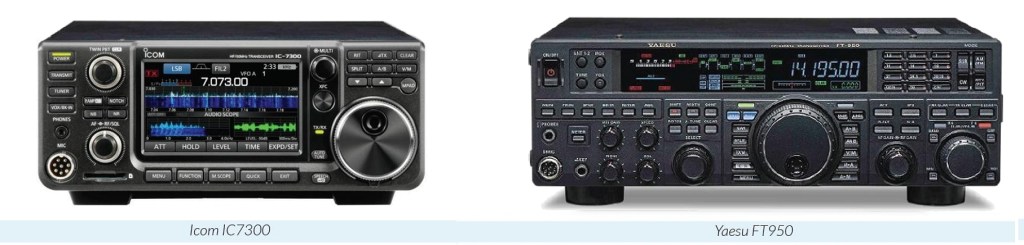
The evolution of controls
Over time transceivers have evolved to have more software based settings. Once there may have been a separate knob or button to adjust a value of transmitter power, or microphone gain. Today it is likely to be a setting option in a menu system accessed via a screen.
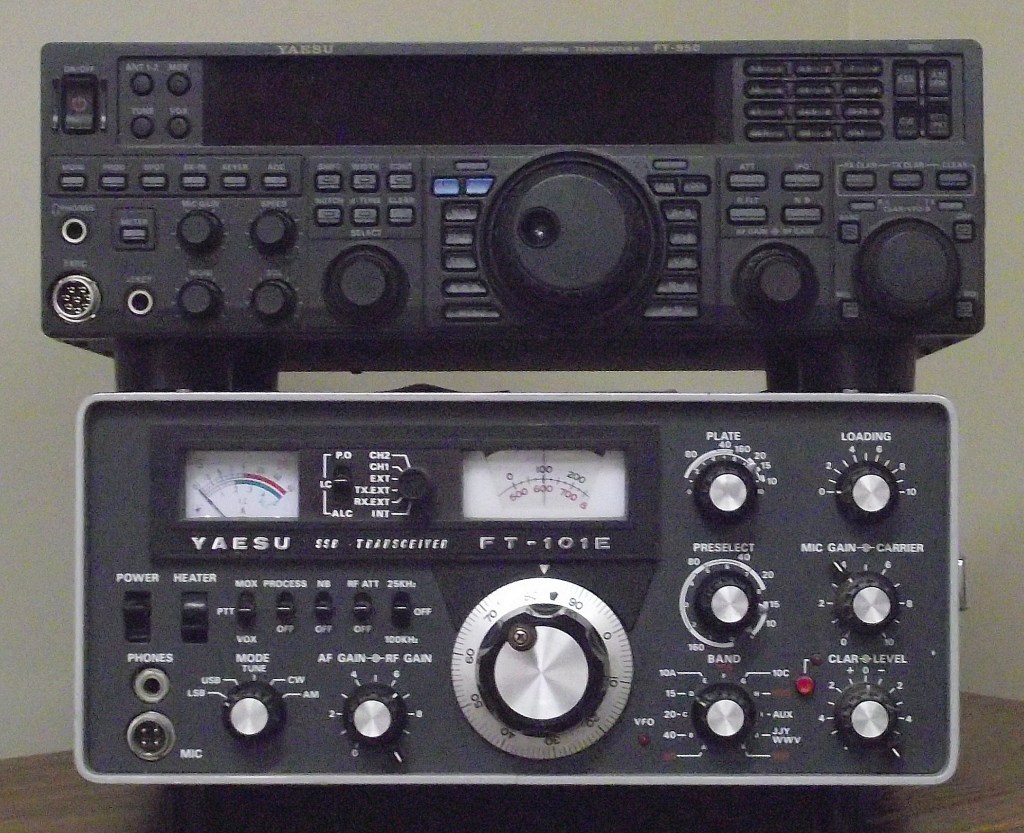
For the Foundation level operator it is sufficient to recognise that similar basic features exist on all transceivers, even if their method of access have changed with time and manufacturer preference.
All radios are going to have an audio volume control for a speaker, even if some brand it as ‘AF Gain’. All transmitters will have a method of adjusting transmitter power, even if it is just a High/Low switch. All FM receivers will have a Mute or ‘Squelch’ control to turn off the speaker when there is no signal. The important take away for a new operator is to understand that these controls exist, even if it takes a dive into a specific operator manual to locate them for a given radio.
These are the key controls and settings that operators should be aware of:
All Transceivers
- Power on/off switch
- Receiver Volume (Sometimes called AF Gain)
- Transmitter power level control (sometimes called Carrier Control’)
HF & Sideband Transceivers
- Receiver Incremental Tuning (RIT) Control (sometimes called a Clarifier)
- RF Gain control (usually a knob)
- RF Attenuator control (usually a switch)
- Noise Blanker (usually a switch, to block fast noise impulses)
- VFO Knob (for frequency selection)
- Microphone Gain Control (to adjust microphone sensitivity)
- Speech processor control (to lift the average transmitted audio volume.)
- Band Selector Switch
- Mode Control (To choose the modulation method AM/FM/SSB/CW/RTTY)
AM/FM transceivers
- Mute Control (Sometimes called Squelch)
- Repeater Offset setting
- Reverse Control (to briefly listen on the Input Frequency of a repeater)
- CTCSS Repeater access tone setting
- VFO frequency Select knob, or channel selector.
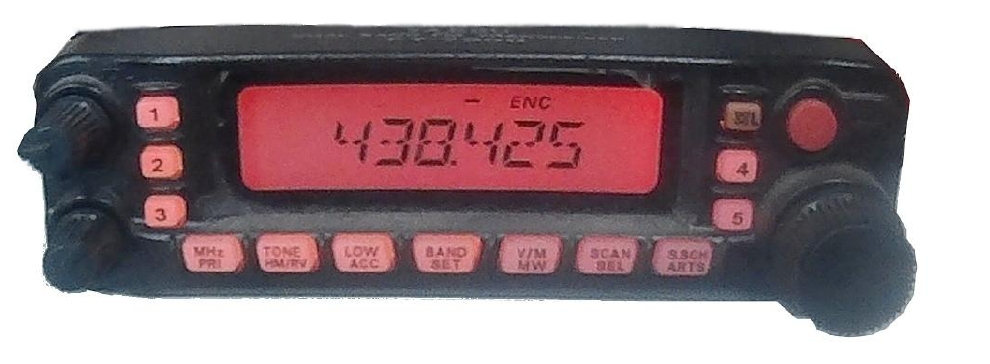
A more complete description of these controls appears in the Foundation Level Study Guide as detailed below.
The Foundation Level Study Guide
All Blue Tiles form part of the syllabus for the Foundation Level Recognition Certificate (operator licence). A primary source of information for many of the blue tile topics can be found within the Foundation Level Study Guide. This is a free download available at:
https://vkradioamateurs.org/flsg/ This is a digital book and contains many links to other resources and explanatory videos.
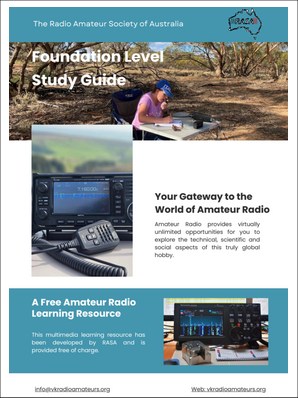
Information about basic Transceiver controls relevant to Foundation Level Qualifications can be found in this book from Chapter 8, on Pages 61 to 63
ACMA Syllabus Extract
According to the ACMA Foundation Syllabus, the required knowledge on this topic is:
4.2 Importance of proper transmitter adjustment
Recall that improper adjustment of a transmitter can cause harmful interference to other radiocommunications services, both inside and outside the frequency bands allocated to amateurs.
4.8 Effect of AF gain control on output modulation
Recall the need to ensure microphone gain, where fitted, is correctly adjusted to avoid over-modulation of AM or FM transmitters.
4.9 Effects of Over Modulation
Recall that excessive modulation of transmitters may cause distorted output and interference to adjacent frequencies.
4.10 Transceiver Controls
Recall the purpose of the following controls: AF Gain, RF Gain, Squelch, Mode, VFO, RIT, Band and Carrier control.
8.5 Operating through a Repeater
Recall and demonstrate, using supplied reference material, the correct use of voice repeaters, including the use of continuous tone-coded squelch system (CTCSS) and dual tone multiple frequency (DTMF) access control systems.
9.21 Safe Use of Headphones
Recall that excessive volume when wearing headphones can cause damage to human hearing.
 This Is Amateur Radio