
P79
Long Distance VHF & UHF Contacts
Radio waves can be dangerous
While page 75 covered the basics of HF propagation via the ionosphere, a different set of conditions apply to VHF and UHF transmissions.
Frequencies above 30MHz will (generally) pass through the ionosphere and don’t reflect back to earth as Sky Waves. For this reason, transmissions on the 6M, 2M and 70cm bands are usually limited to Line of Sight (LOS) communications.
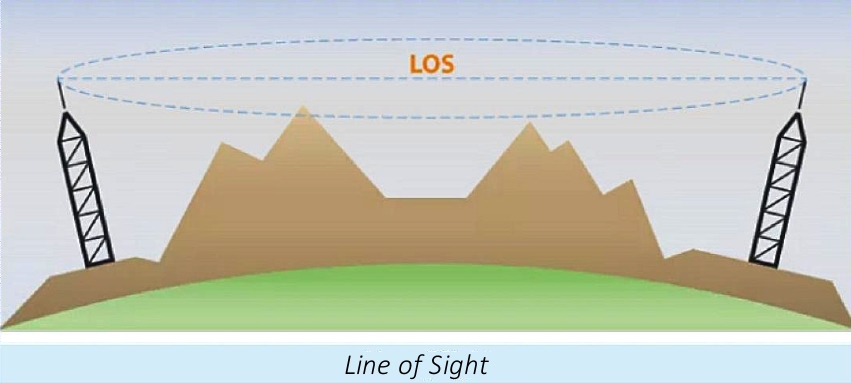
At these higher frequencies, any obstacle between two stations, such as a hill or building, can block a signal. In most situations, antennas for VHF and UHF benefit from being mounted as high as possible in order to achieve a greater Line of Sight distance. However, there are exceptions to this condition
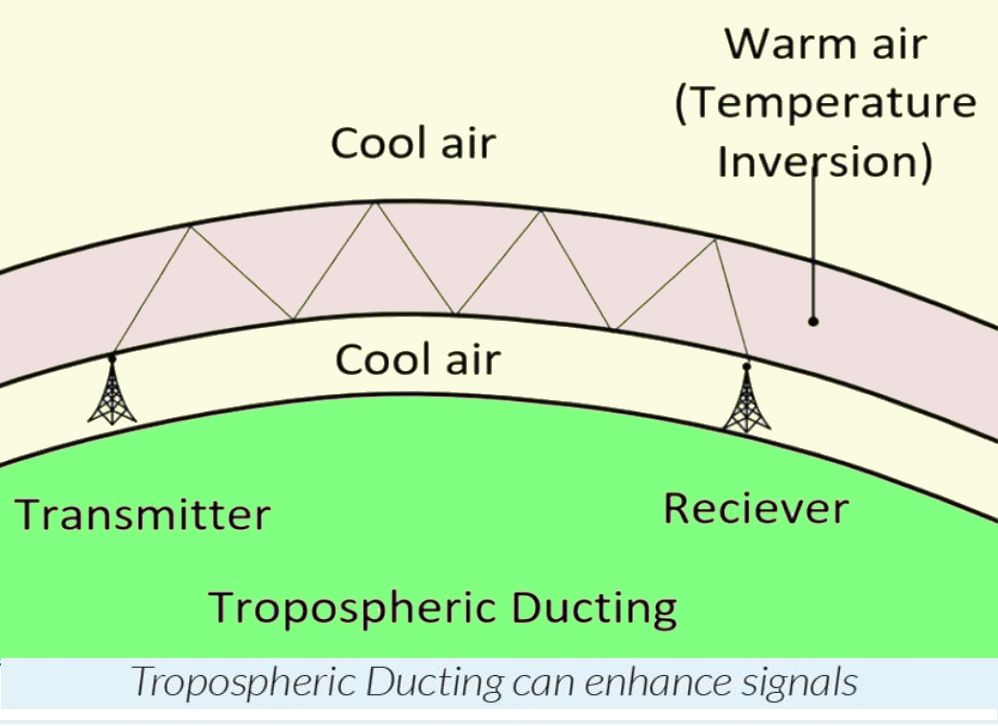
A situation can exist where warm air gets trapped between layers of cool air and this will allow short-range VHF and UHF signals to reflect between these layers and travel for hundreds and sometimes thousands of kilometres. It is most common in summer along long stretches of coastline where air of different temperatures from land and sea meet. Long range VHF and UHF transmissions are possible under these conditions. The effect is called Tropospheric Ducting.
A more comprehensive description of ionospheric propagation is detailed in the Foundation level Study Guide (FLSG).
The Foundation Level Study Guide
All Blue Tiles form part of the syllabus for the Foundation Level Recognition Certificate (operator licence). A primary source of information for many of the blue tile topics can be found within the Foundation Level Study Guide. This is a free download available at:
https://vkradioamateurs.org/flsg/ This is a digital book and contains many links to other resources and explanatory videos.
Information about long distance VHF and UHF communications relevant to Foundation Level Qualifications can be found in this book from Chapter 6, on Pages 48 and 49.
ACMA Syllabus Extract
According to the ACMA Foundation Syllabus, the required knowledge on this topic is:
6.1 Propagation Basics
Recall that radio waves travel in straight lines, unless diffracted, reflected or refracted.
6.4 Effects of Obstacles
Effect of obstacles and structures on VHF and UHF signals
6.5 Long distance communications on VHF and UHF
Recall that unusual atmospheric conditions may at times provide extended range.
 This Is Amateur Radio